
Projects
These are terrariums we have built, from custom enclosures to fully automated habitats with rain, mist and flooding. Each one was planned around the animals and plants that live in it, and each taught us something we now use in new builds.
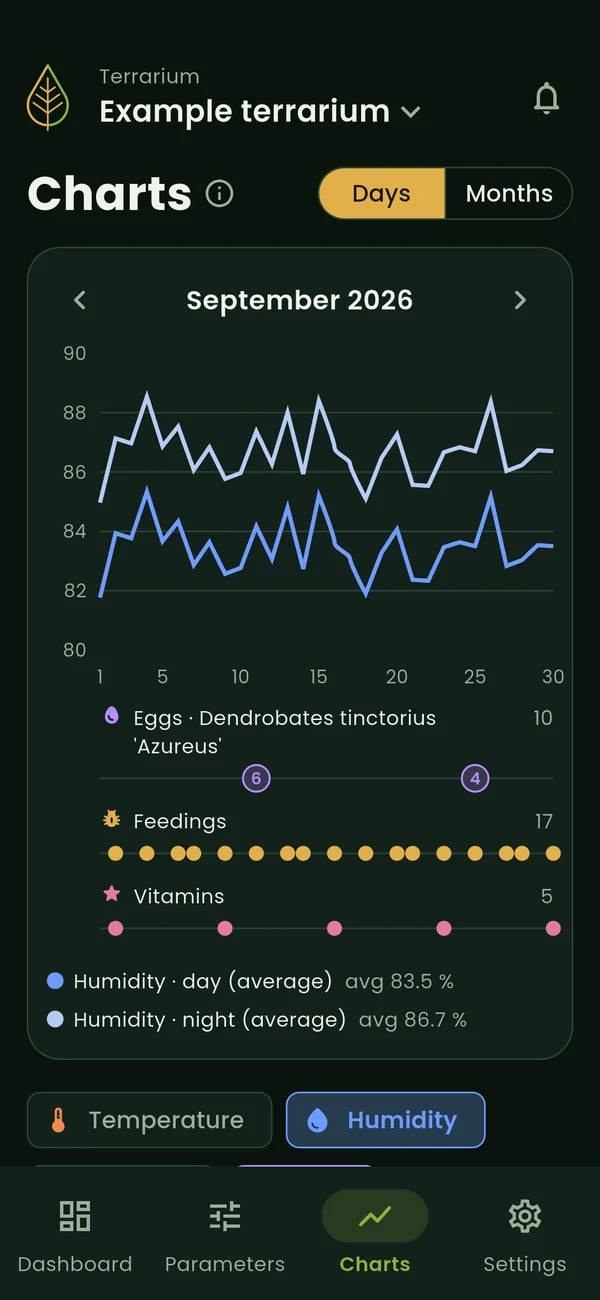
JungleSIM
Every habitat on this page needed rain, fog, light and heat on time, so we built the controller we wanted ourselves. JungleSIM combines wireless sensors, a controller with an e-paper display, smart plugs and an app: it holds temperature and humidity in range, runs real seasons and tells us when something needs attention.
- Climate autopilot: Heater, fans, mister, fogger and any other device switch on only when the readings call for it.
- Seasons: Rainy and dry seasons with gentle transitions over weeks.
- Smart plugs: Up to eight Shelly plugs per controller switch the devices you already own.
- App: Live climate, charts, care log, breeding records and photo albums for every tank.
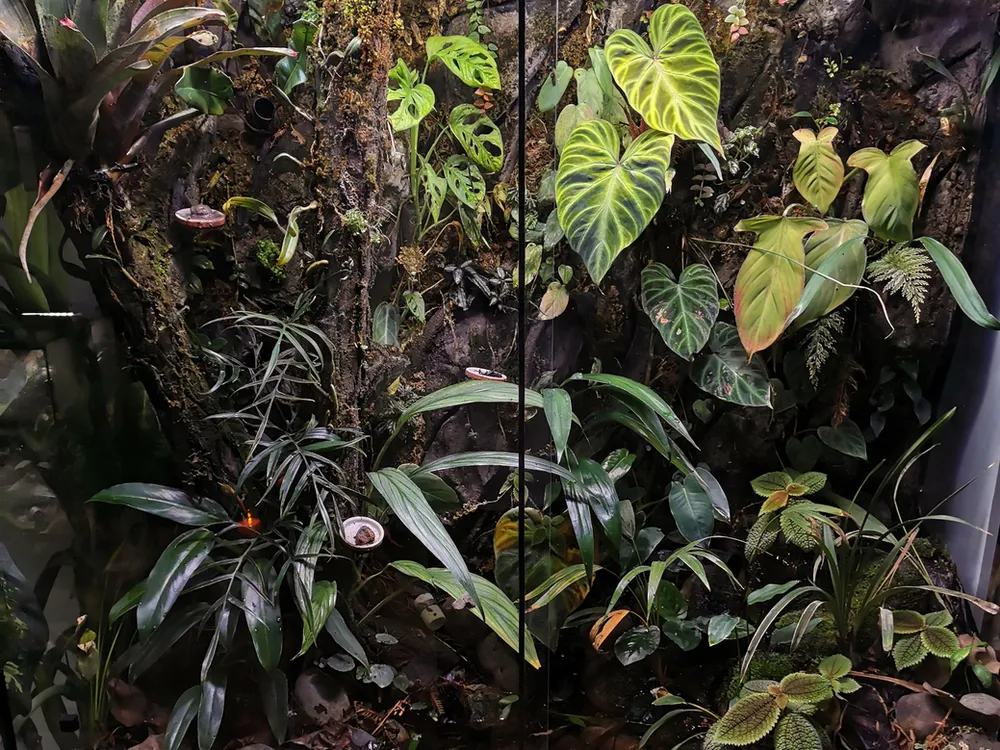
Ephemeral Floodforest
The Ephemeral Floodforest is a 900 L terrarium that recreates the seasonal changes of a tropical rainforest. It was built for Teratohyla pulverata glass frogs and also houses a community of species that get along with them.
Its technology changes the conditions over the year, so the habitat follows the frogs' seasons.
What it has:
- Air circulation: Steady airflow keeps the humidity and temperature gradients where they should be.
- Sensors and actuators: Temperature, humidity and other values are measured all the time and controlled automatically.
- Flooding: Parts of the terrarium flood the way the forest does in the rainy season.
- Rain and fog: Rain showers and fog shape the microclimate like in a real rainforest.
- Misting: Targeted misting keeps plants and animals hydrated.
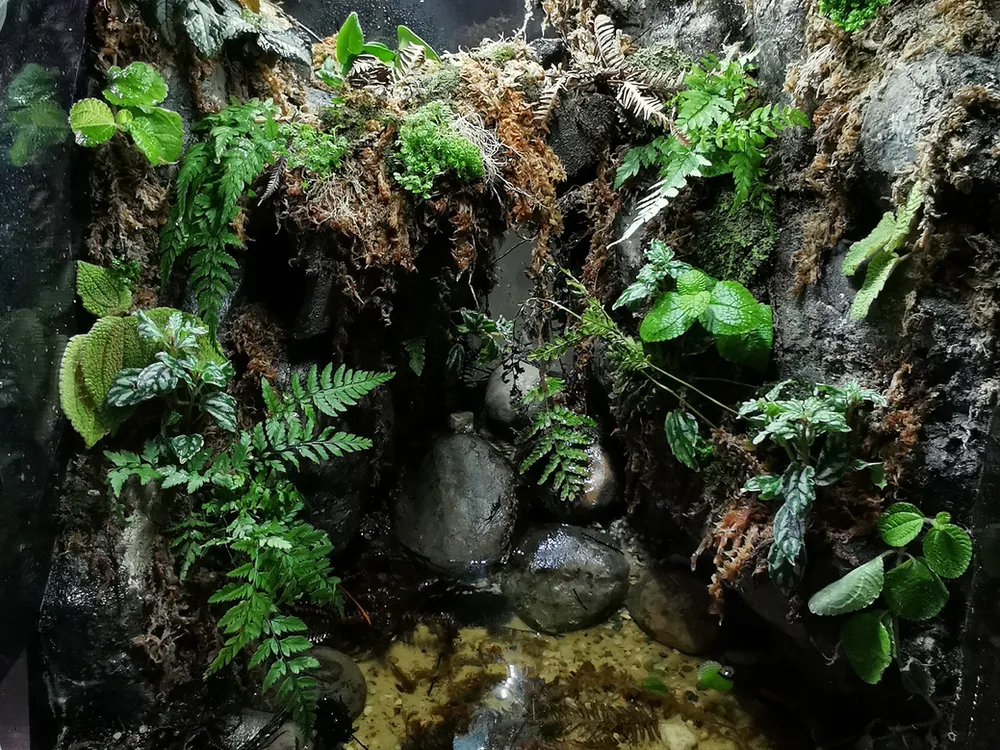
Cliffside Stream Habitat
The Cliffside Stream Habitat recreates rocky cliffs along a stream. It is home to our Theloderma corticale, the Vietnamese mossy frog.
What it has:
- Rain and misting: Together they keep the humidity high and imitate seasonal rain, which the frogs need for drinking and their natural behaviour.
- Stream: A stream winds between two rock walls, looks good and gives the frogs as much usable water area as possible.
- Vertical rock walls: Textured walls to climb and hide in, like the rocky habitats the frogs come from.
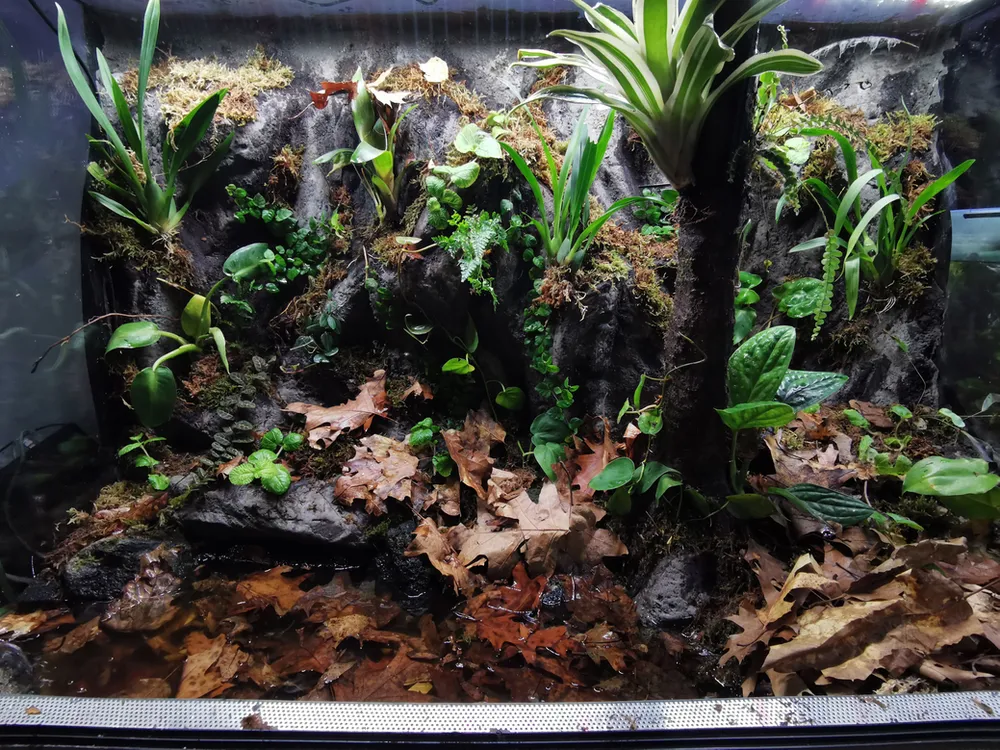
Tribolonotus gracilis Enclosure
A custom terrarium built for the needs of red-eyed crocodile skinks (Tribolonotus gracilis), practical to keep and natural to look at.
What it has:
- Moist substrate: A substrate that holds moisture well keeps the skinks healthy and comfortable.
- Water: Built-in pools or streams for drinking and for humidity, since the species spends a lot of time near water.
- Climbing and hiding: Logs, rocks and hides placed so the skinks climb and dig as they would in the wild.
Bog Cascade Paludarium
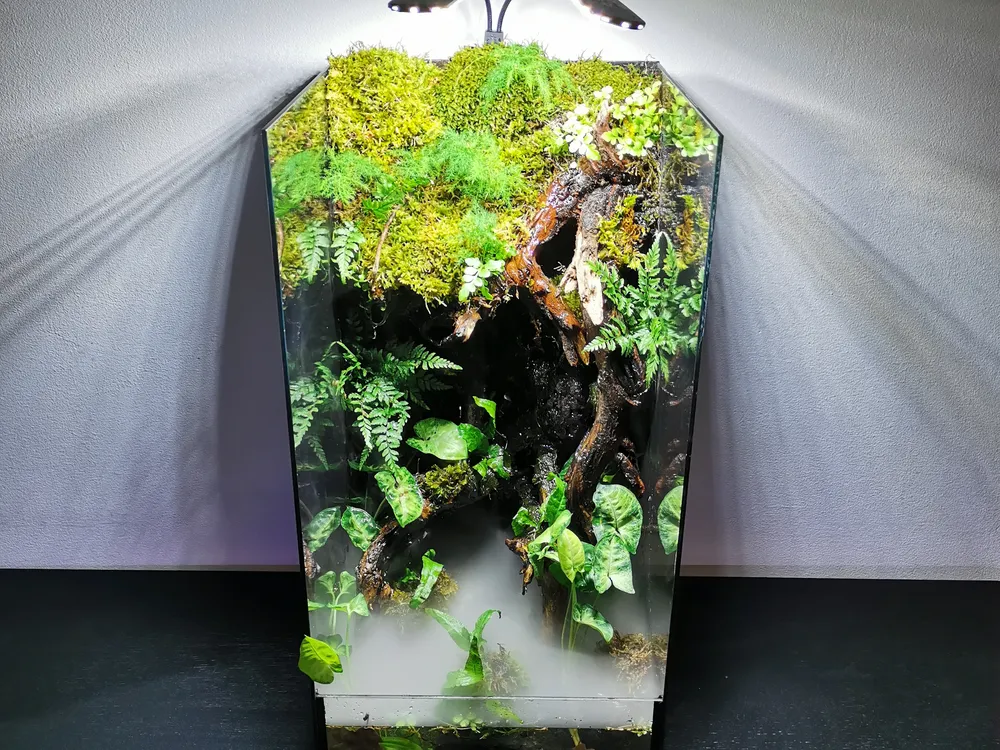
The Bog Cascade Paludarium is an open-front display tank modelled on a quiet bog, with land and water areas side by side.
What it has:
- Open front: Nothing between you and the habitat, so every detail is in view.
- Waterfall and stream: A waterfall runs into a slow stream and brings movement into the bog.
- Bog: Plants and terrain recreate the wet ground of a natural bog, where moisture-loving plants grow well.
Swamp Wall Drip Terrarium
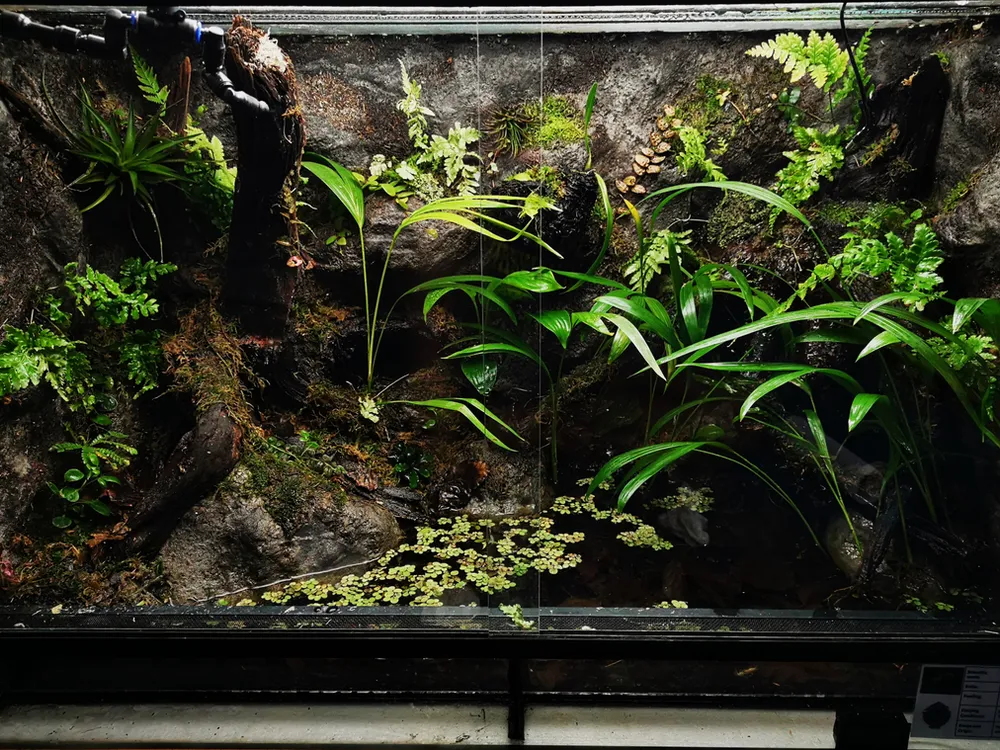
The Swamp Wall Drip Terrarium recreates the dense, humid conditions of a swamp.
What it has:
- Drip wall: A textured back wall with water running down it all the time, damp and mossy like the surfaces in a swamp. It keeps the animals hydrated and the plants growing.
- Swamp terrain: Water and land areas in balance, planted with moisture-loving plants.
- High humidity: Keeps the moisture level steady throughout the terrarium.
Lush Rainforest Terrarium
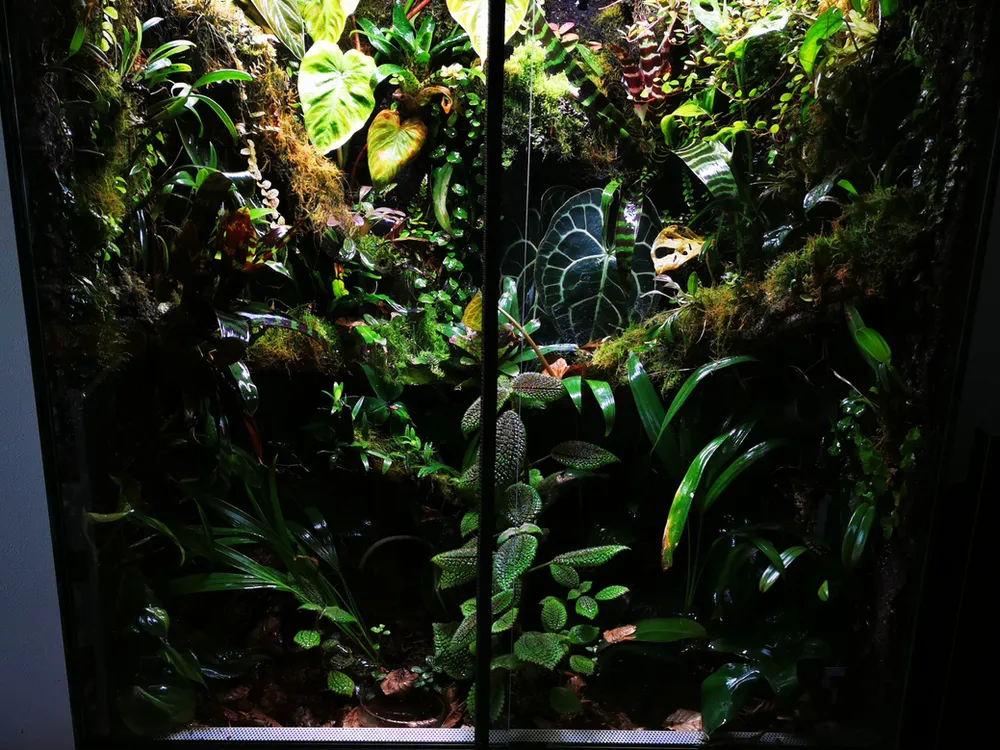
The Lush Rainforest Terrarium recreated the dense tropical forest of Central America. It was home to a group of Phyllobates vittatus (Golfodulcean poison dart frogs) and gave them room for their natural behaviour.
What it had:
- Dense planting: Many tropical plants formed several layers, from canopy to ground cover, like the frogs' native rainforest.
- High humidity and misting: Kept the moisture right for the frogs and the plants.
- Natural layout: Logs, moss and leaf litter made it look real and gave the frogs plenty of places to hide and climb.