
Improving Airflow and Ventilation in Terrariums
Why aluminum vents starve a terrarium of air, and how mesh screens and an internal fan fix fogged glass, mold and algae.
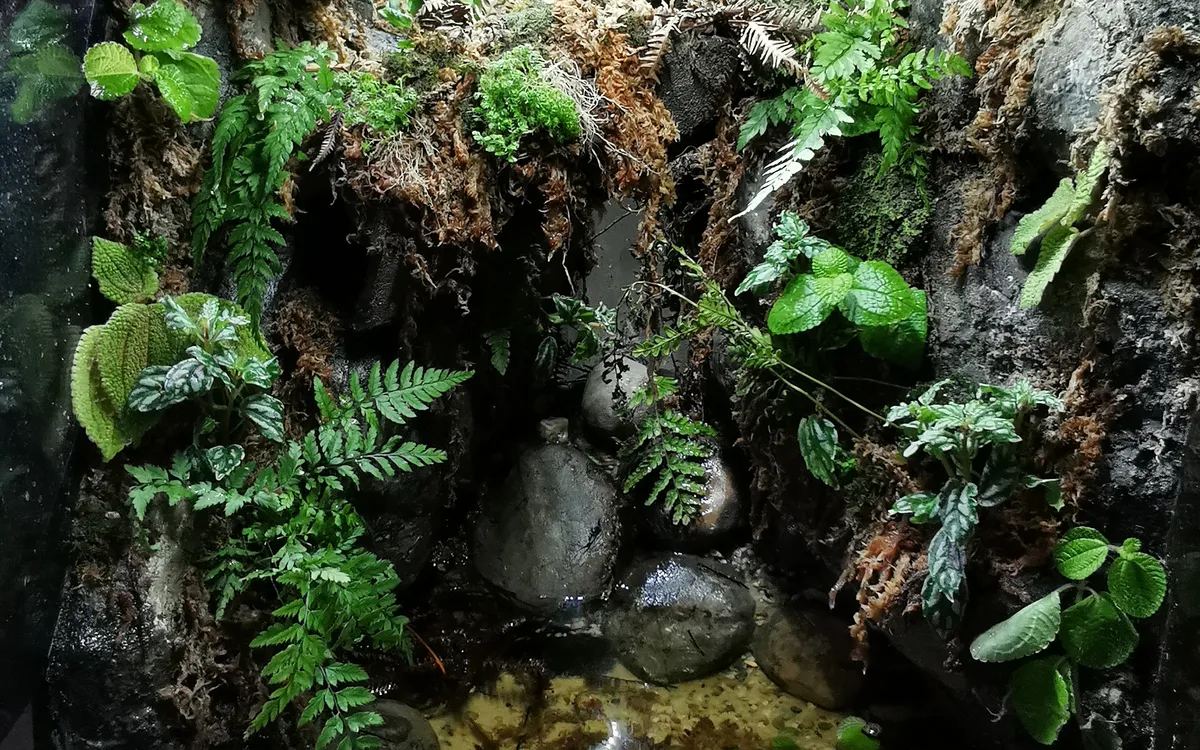
A terrarium needs moving air. Good ventilation keeps the air fresh, stops harmful gases from building up, helps plants grow and keeps the animals comfortable. Without it, mold, fungi and bacteria take over and the humidity climbs too high for the setup to stay healthy.
The Problem with Traditional Designs
Euro-style terrariums used to ventilate well on their own. Over time, though, many have switched to aluminum mesh, which looks good and is easy to fit but causes real airflow problems. Aluminum mesh has a poor hole-to-material ratio: the holes are small compared to the metal around them, so very little air gets through.
The most visible result is front glass that is always fogged. Humidity builds up inside, and without enough air movement it has nowhere to go, so you can barely see into the tank. It is worst in the morning and after watering.
Plants suffer too. Many plants, tropical ones in particular, need good air circulation. Stale air leads to fungus and mold, and to a very common problem that is rarely talked about: algae on the leaves. The algae block light, so the plant photosynthesizes less and grows poorly. Animals are usually less affected by poor airflow, but in rare cases some species are.
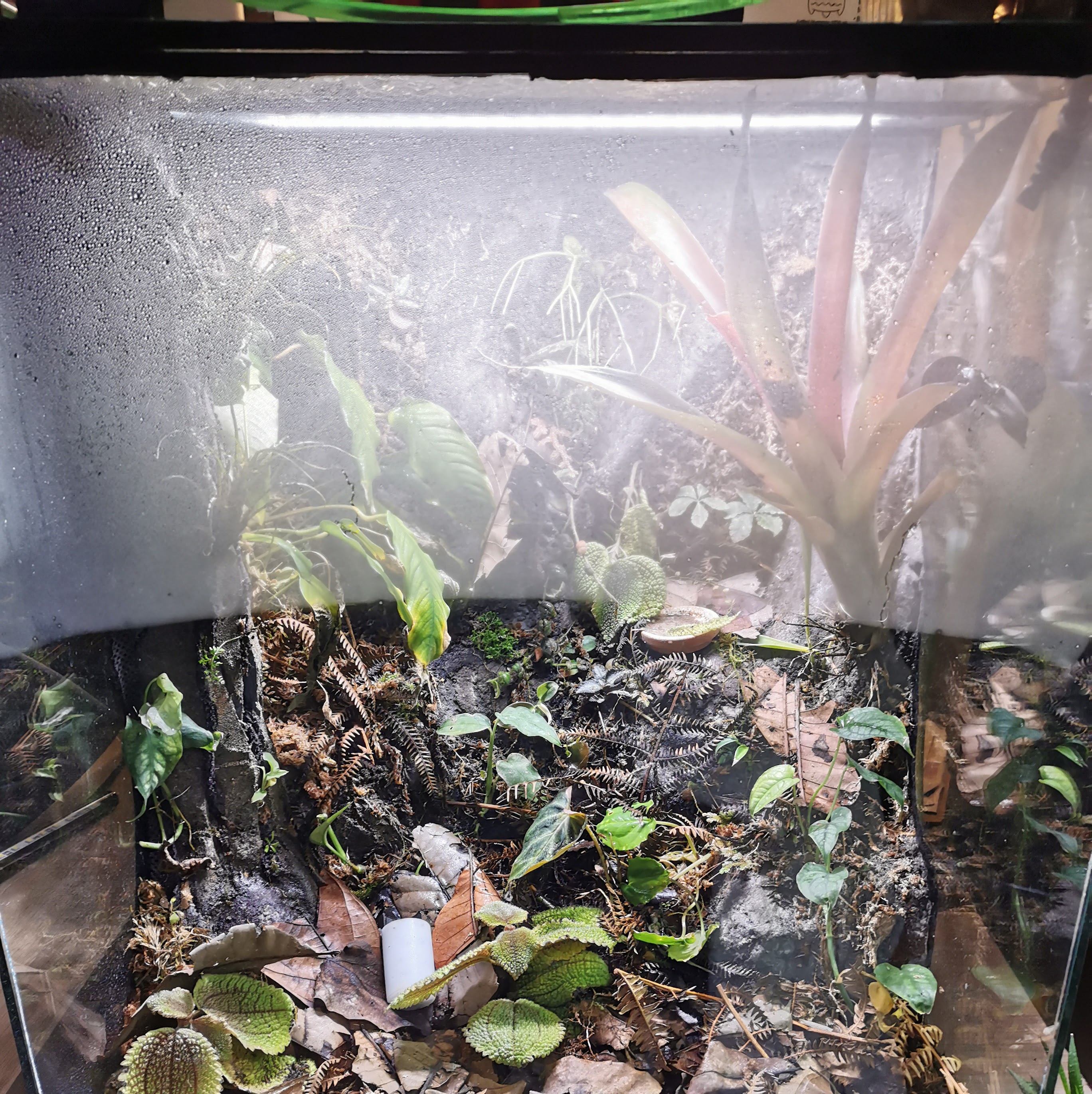
How to Get Better Airflow
Two changes make a big difference while keeping the setup practical and good-looking.
1. Mesh Screens (like mosquito netting)
The best fix is to replace the vents with mesh screens of the kind used for mosquito netting. They have a much higher hole-to-material ratio than aluminum mesh and let far more air through. They are also usually fruit fly proof, so feeder insects can’t escape.
The downside is that mesh is less rigid than aluminum. That is why we designed our own vents, which keep the structure stable and still ventilate very well. They are easy to fit and maintain. If you want better airflow without weakening your terrarium, have a look at the custom vents in our shop.
2. Fans for Circulation
A fan improves airflow further. Use one that only moves the air inside the terrarium and doesn’t blow air in or out. A fan that blows air into the terrarium upsets the humidity and dries everything out too fast. What you want is gentle air movement that stops the air from going stale without changing the humidity much.
We sell fans with holders that are easy to install. With the right fan in place, plants stay healthy and the animals stay comfortable, without the terrarium drying out.