Oophaga histrionica Care and Breeding
How to keep and breed Oophaga histrionica, the harlequin poison dart frog: terrarium, climate, feeding, and how the female feeds her tadpoles with eggs.
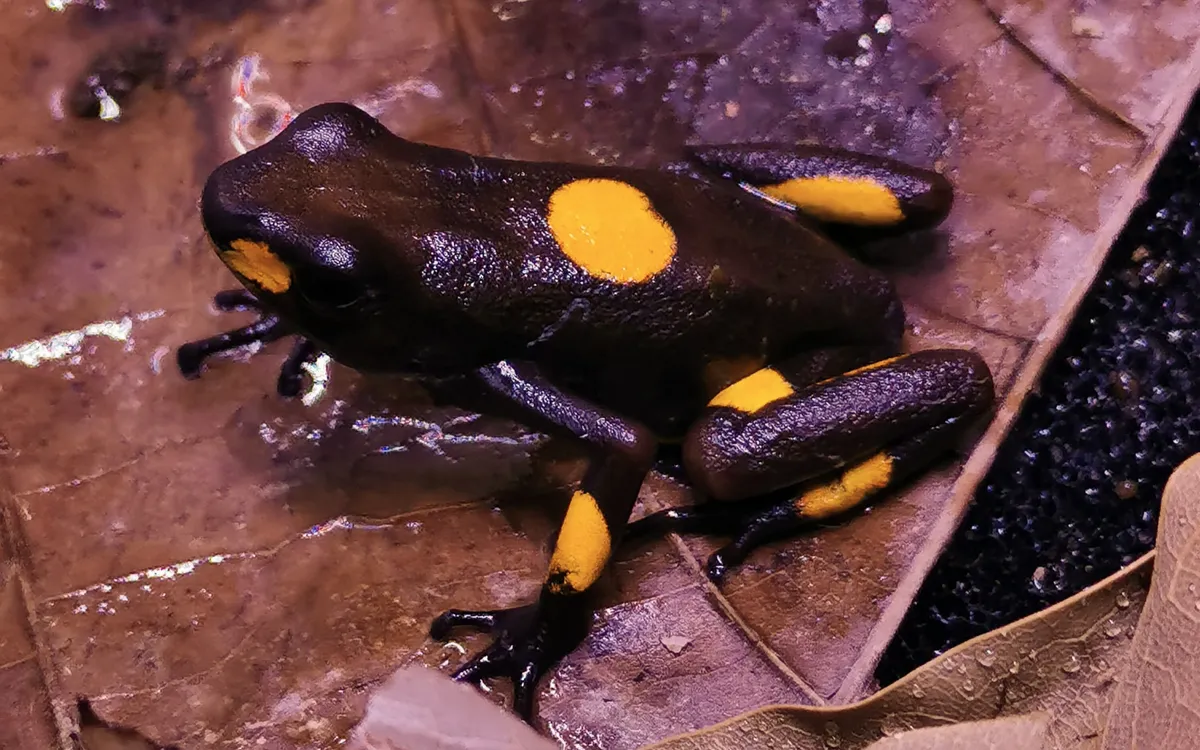
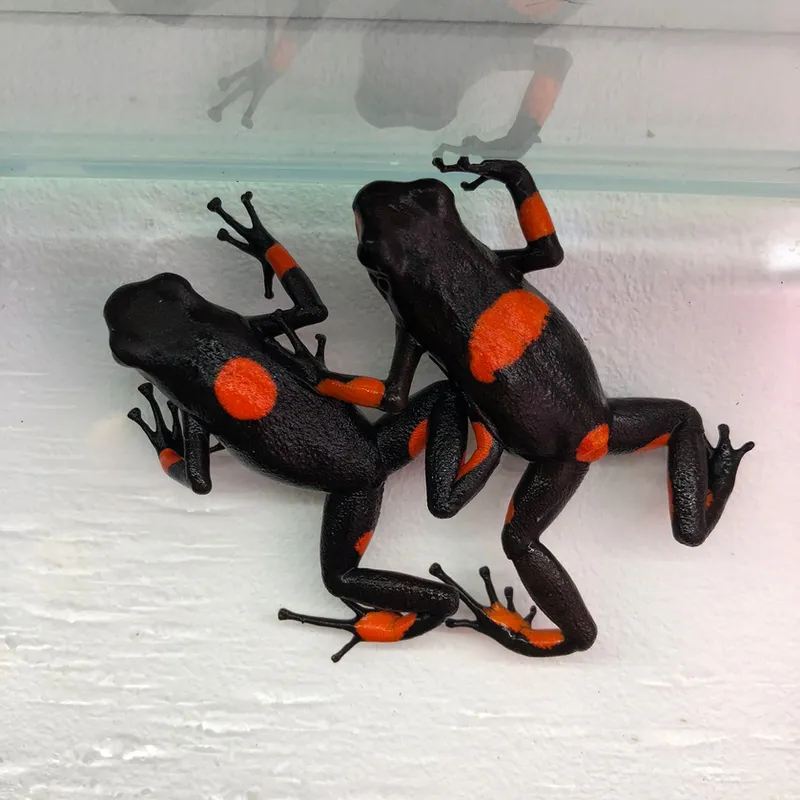
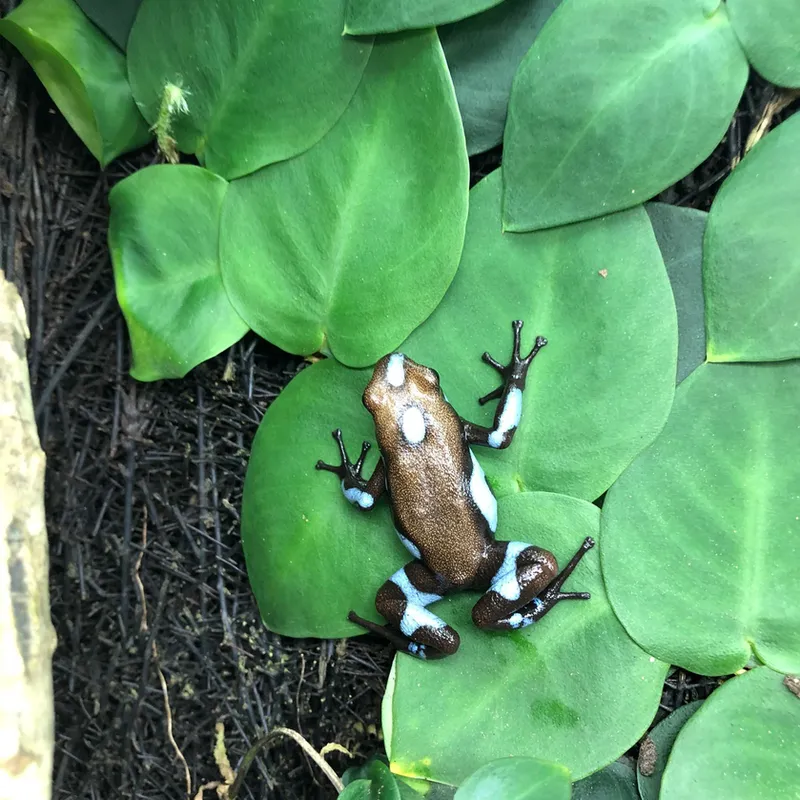
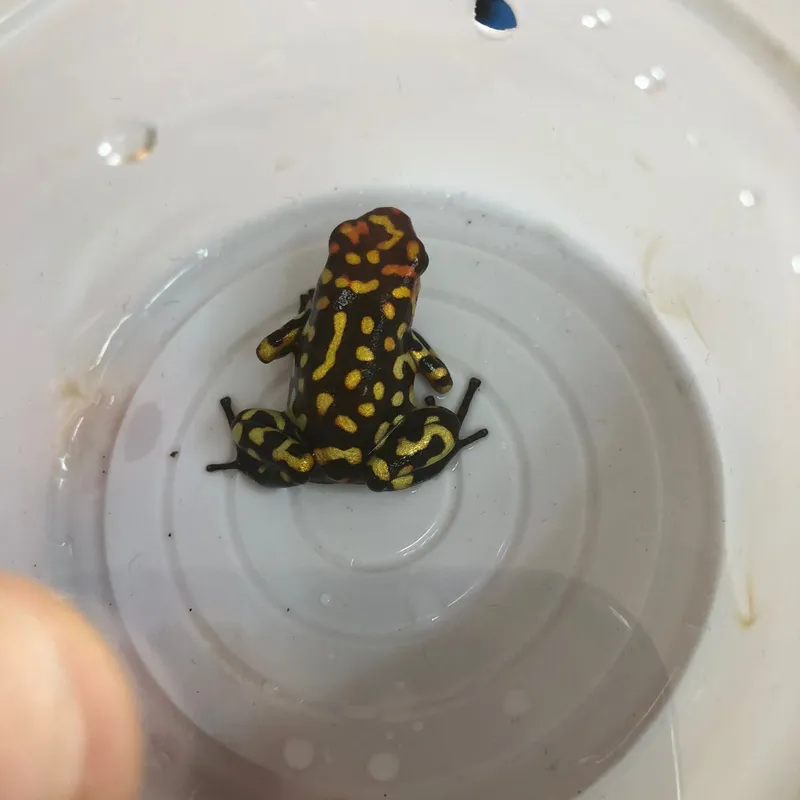
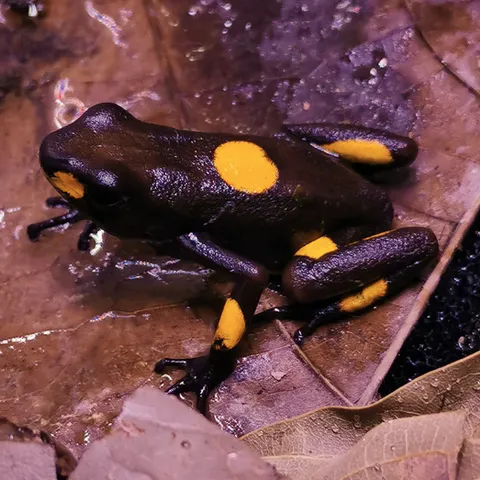
Oophaga histrionica, the harlequin poison dart frog, is one of the most striking and sought-after dart frogs. It comes from the humid rainforests of Colombia, and its bold colors and patterns differ a lot from morph to morph. Adults are usually 3-4 cm long, and their parental care is among the most interesting in the hobby. Males are very territorial, so we recommend keeping this species in pairs. If you keep a group, have only one male with several females.
Care
Terrarium Size
A pair needs at least 45 x 45 x 45 cm (18 x 18 x 18 inches). A larger tank keeps conditions more stable and gives these active frogs more room. They climb a lot, so height matters: add plenty of plants and vertical structure.
Temperature
Keep the day temperature at 22–26°C (72–78°F) and let it drop slightly to 20–22°C (68–72°F) at night. These frogs overheat easily, so avoid high temperatures. A heater on a thermostat keeps things stable.
Humidity
Humidity should stay high at 80–100%. You need a misting system or regular misting by hand. Make sure there is enough airflow, because stale air leads to health problems.
Lighting
Bright full-spectrum lighting is good for the frogs and the plants. UVB isn’t strictly necessary, but we recommend a few hours a week for their general health.
Feeding
Oophaga histrionica mainly eats small invertebrates: flightless fruit flies (Drosophila melanogaster and D. hydei), springtails and pinhead crickets. Offer a mix of prey dusted with a good calcium and multivitamin supplement, 4–5 times a week.
Breeding
Breeding Setup
Give them a quiet, safe tank with plenty of vertical surfaces to climb. Males call from exposed spots to attract females.
Mating Behavior
Males are territorial and compete with each other for females. When a female is ready to mate, she walks up to the male and taps him on the back. The male then leads her to a hidden spot to lay the eggs, often a film canister or something similar where the eggs are protected.
Egg Laying
The female lays several eggs at a time in a damp, sheltered spot. The male stays close and fertilizes them.
Tadpole Care
The most remarkable part of breeding Oophaga histrionica is how the tadpoles are fed. As the name “Oophaga” (egg eater) suggests, they live on unfertilized eggs from the female. About once a week she visits each tadpole and lays several infertile eggs for it. The tadpoles eat the eggs along with some of the female’s skin. We strongly recommend leaving the tadpoles in the parents’ tank, because the parents keep caring for them.
Raising tadpoles outside the parents’ tank is possible in theory but hard. Some keepers have managed with egg clutches from other females, but that isn’t ideal. Crushed chicken egg yolk has also been used, though it fouls the water quickly. Tadpoles are cannibalistic, so if they don’t stay with their parents, each one needs its own container. Usually, though, the parents look after them well.
Froglet Care
Froglets need a smaller grow-out tank with high humidity, lots of hiding places and food that is easy to reach. Start them on tiny springtails and Drosophila melanogaster, move on to larger prey as they grow, and dust everything with supplements. Their care is the same as for adults, but pay extra attention to hydration and diet.
Seasonal Cycles
Simulating a rainy season with more misting and slightly lower temperatures can trigger breeding. Afterwards, go back to normal conditions gradually, which helps keep the frogs in good breeding condition.
References
Animal Diversity Web - Oophaga histrionica. Available at: https://animaldiversity.org/accounts/Oophaga_histrionica/ (Accessed: 07.01.2025).
DendroBase - Oophaga histrionica. Available at: https://www.dendrobase.de/html/D_oophaga_histrionica.html (Accessed: 07.01.2025).
Photo gallery