Phyllobates vittatus Care and Breeding
How to keep and breed Phyllobates vittatus, the Golfodulcean poison frog: group housing, climate, setup, feeding, sexing and raising the tadpoles.
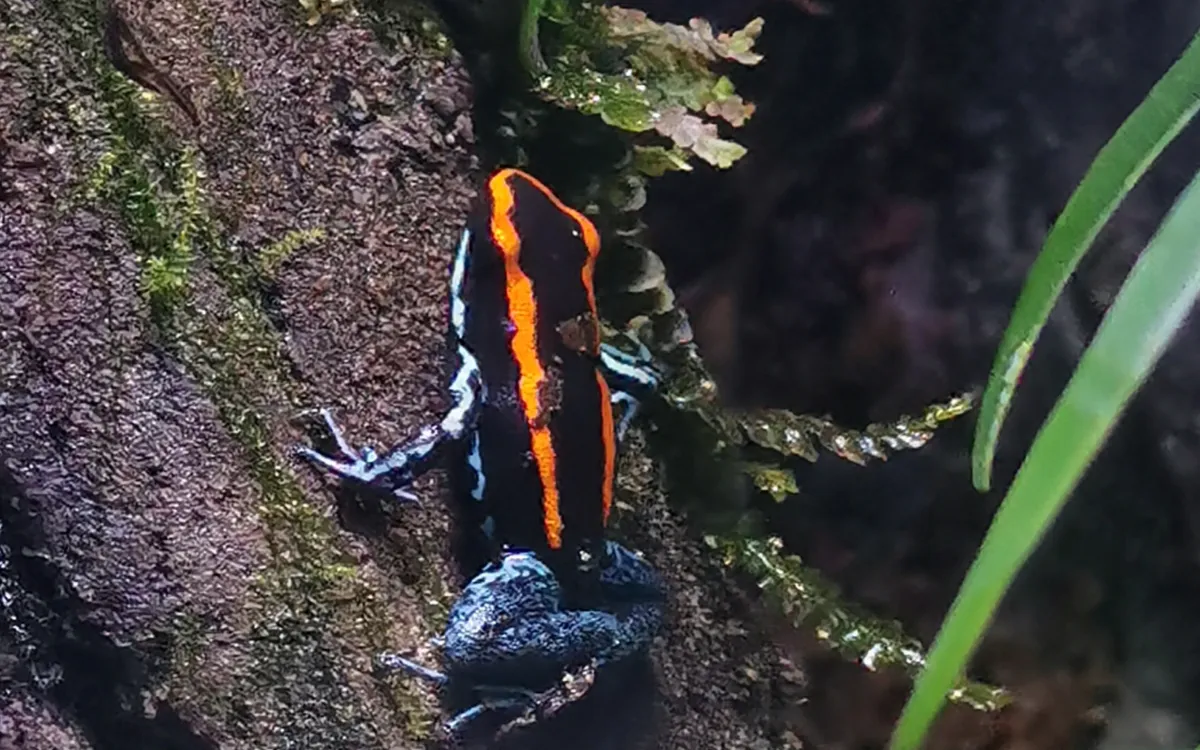
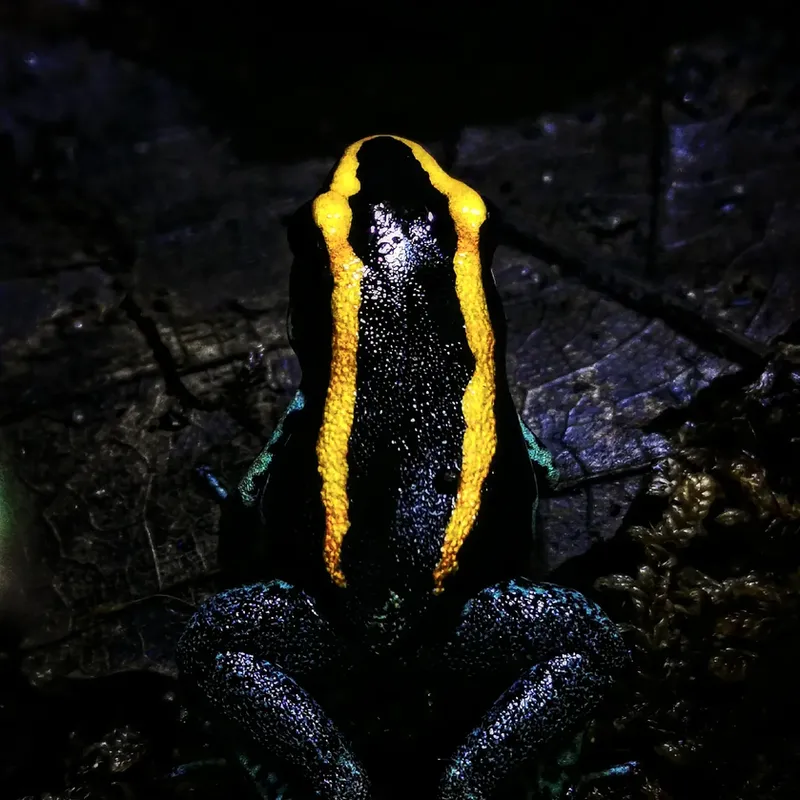
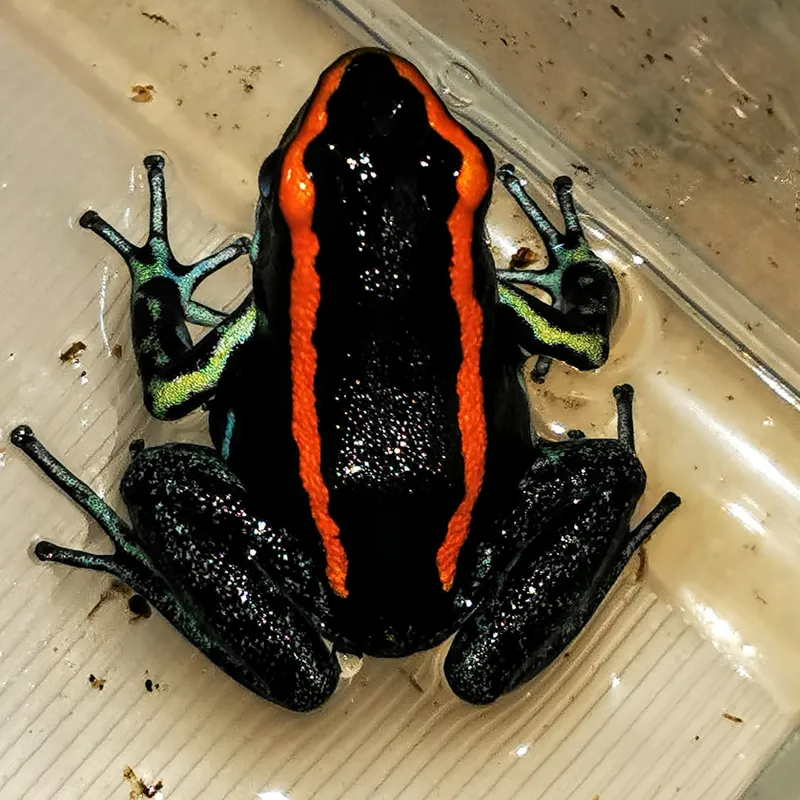
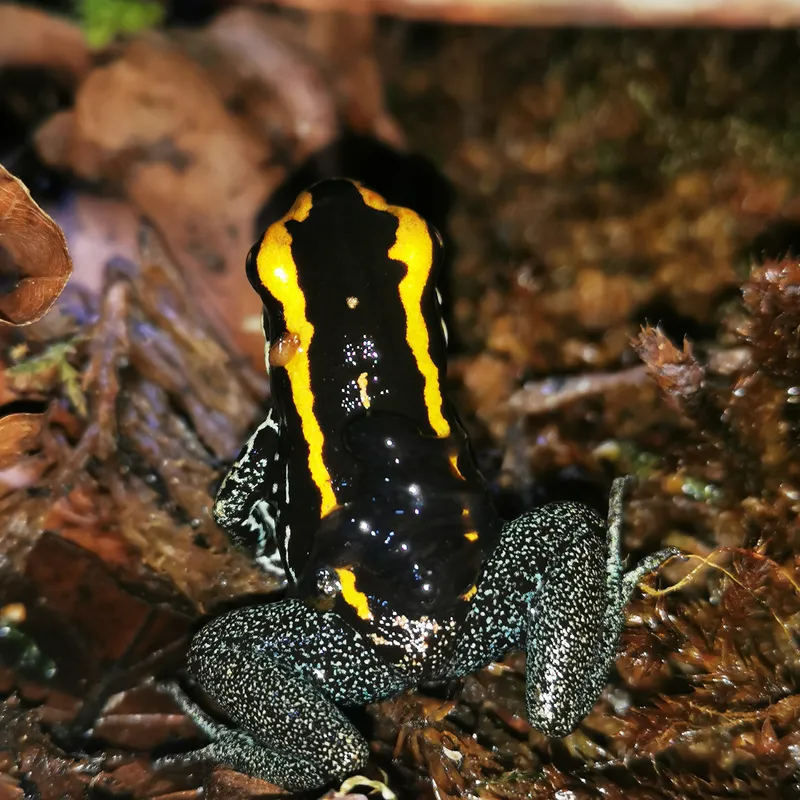
Phyllobates vittatus, the Golfodulcean poison frog, comes from the Pacific lowlands of Costa Rica. It is easy to recognize: a glossy black body with bright orange or yellow stripes along the sides. In captivity it produces hardly any toxin, and its activity and interesting behavior make it a good species for intermediate and advanced keepers. Unlike most dart frogs, it isn’t split into morphs, although bloodlines do differ.
Care
Terrarium Size
A group of 2–4 adults is comfortable in a 60 x 45 x 45 cm (24 x 18 x 18 inches) terrarium, though bigger is always better. This species does well in groups. They are quite active, so give them plenty of floor space and vertical structure to explore.
Temperature
Keep the day temperature at 22–28°C (72–82°F) with a slight drop to 20–22°C (68–72°F) at night. Avoid anything hotter: above 28°C (82°F) these frogs get stressed or harmed.
Humidity
Aim for a steady 80–100%. Mist often, and use a drainage layer so no water stands in the tank. High humidity keeps the frogs healthy and their skin moist.
Lighting
Phyllobates vittatus doesn’t need UVB to survive, but a few hours a week of low-intensity UVB does them a lot of good. A bright daylight lamp is a must for the plants and makes the tank look its best.
Substrate and Decor
Use a substrate that holds moisture, such as ABG mix or a blend of coconut fiber, sphagnum and orchid bark. Add a thick layer of leaf litter so they can forage naturally, plus cork bark, driftwood and live plants like ferns, bromeliads and pothos for hiding and climbing. You can also replace the substrate with filter foam, which we recommend: it doesn’t decompose and lets water drain through.
Diet
Feed small prey such as fruit flies (Drosophila melanogaster and Drosophila hydei), pinhead crickets and springtails. Dust every feeding with calcium and multivitamins.
Breeding
Setup
Offer petri dishes inside coconut huts, and film canisters, for egg laying. Males usually call from sheltered spots to attract females.
Sexing
Sexing Phyllobates vittatus by looks isn’t easy, but it can be done. Females are a little larger and rounder (especially when full of eggs), and we have noticed that males’ eyes stick out slightly more than females’ (see the gallery for photos).
Egg Laying and Care
In the rainy season, the female lays a clutch of 5–15 eggs every 7-14 days on damp surfaces such as broad leaves or inside film canisters. The male fertilizes and guards them. At high humidity the eggs hatch after 10–14 days.
Tadpole Rearing
Tadpoles can be raised together in a large container of clean, dechlorinated water, but separate containers lower the risk of cannibalism (especially when the tadpoles differ a lot in size). Feed algae, fish flakes and tadpole food, and change the water regularly to keep it clean.
Froglet Care
After metamorphosis, move the froglets to a grow-out enclosure with damp substrate and plenty of hiding places. We use Tupperware boxes with ventilation holes and a few centimeters of sphagnum. Feed prey of the right size, such as springtails and Drosophila melanogaster, and switch them over to the adult diet gradually as they grow.
Seasonal Cycles
A dry season can trigger breeding. Mist a little less for 6–8 weeks, then go back to heavy misting to signal that the rainy season has started. Pairs often start laying after this.
References
AmphibiaWeb - Phyllobates vittatus. Available at: https://amphibiaweb.org/species/1708 (Accessed: 07.01.2025).
Dendrobase - Phyllobates vittatus. Available at: https://www.dendrobase.de/html/D_phyllobates_vittatus.html (Accessed: 07.01.2025).
Photo gallery