Oophaga pumilio Care and Breeding
How to keep and breed Oophaga pumilio, the strawberry poison dart frog, from terrarium and climate to courtship, egg-fed tadpoles and the winter dry season.
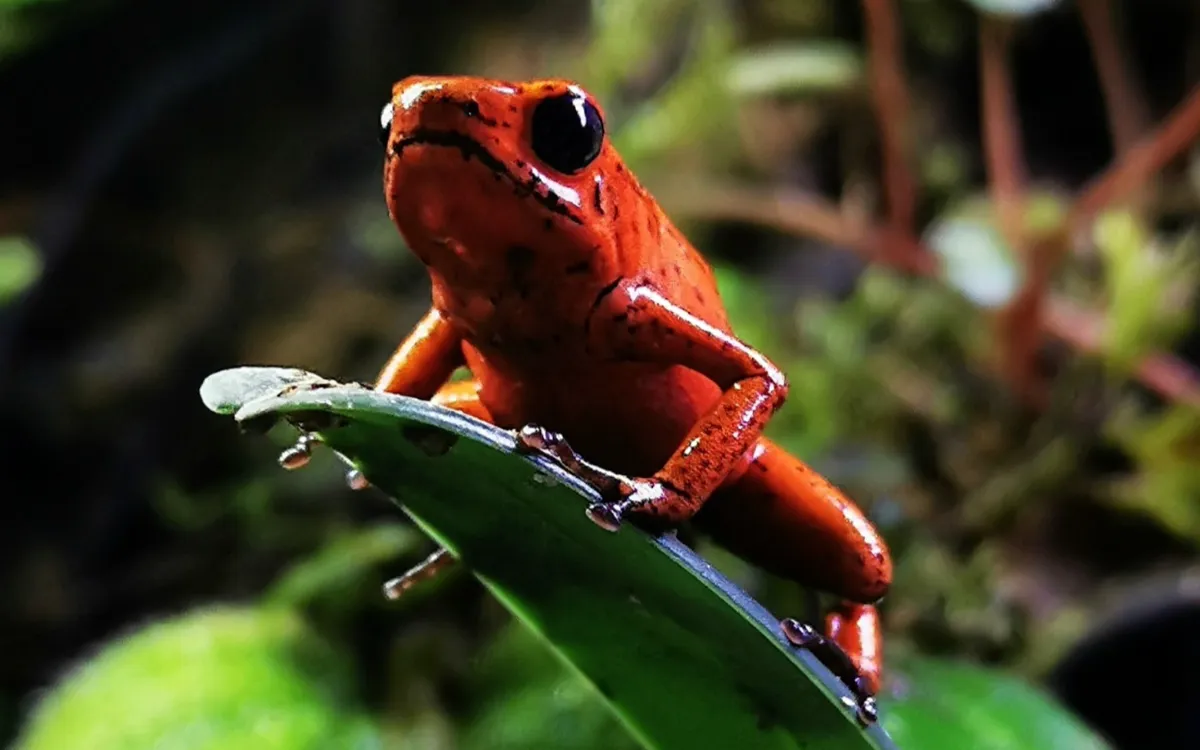
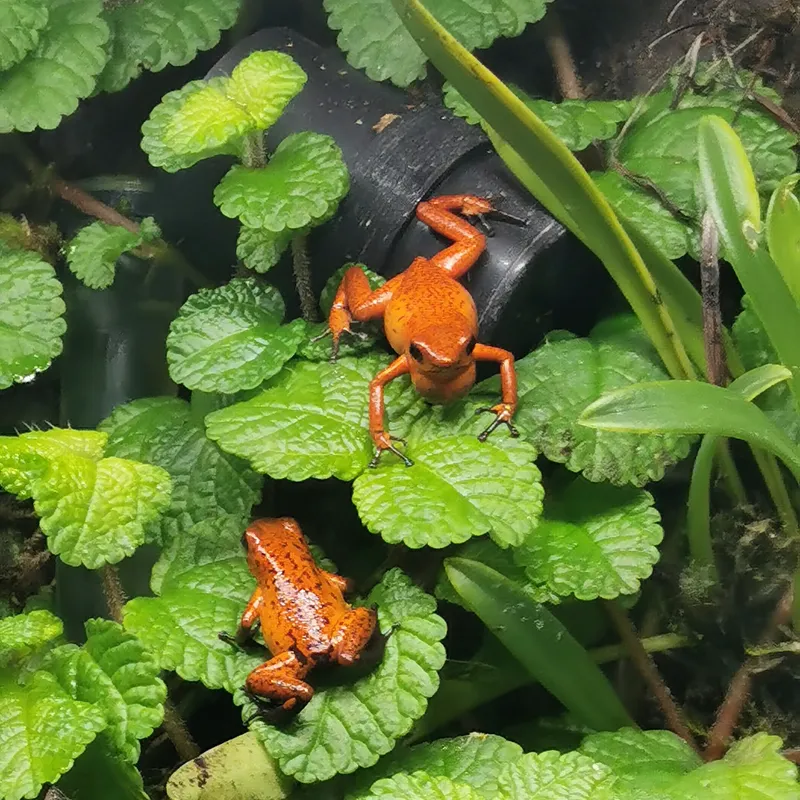
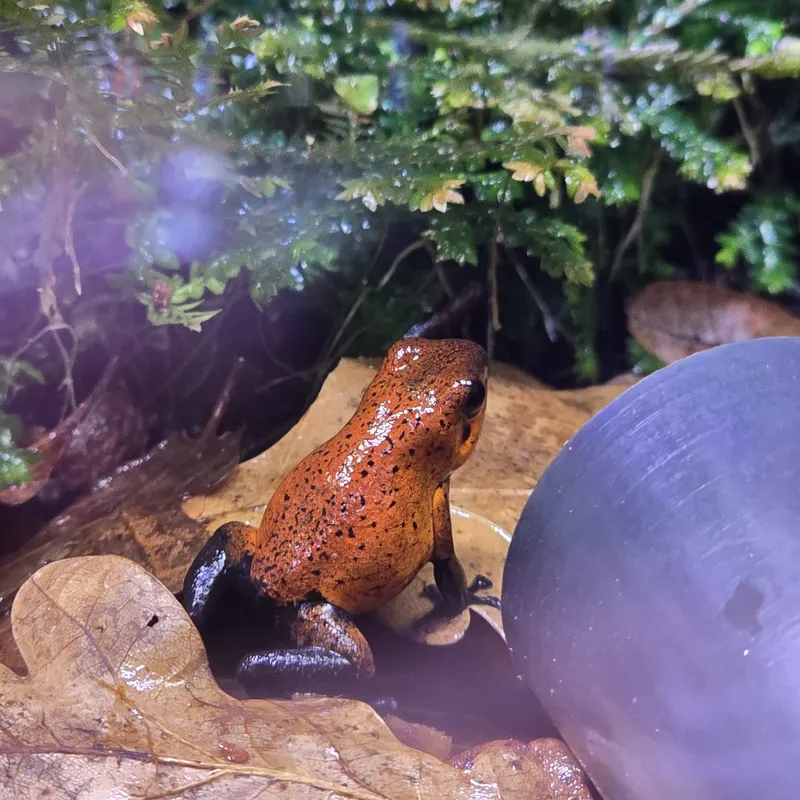
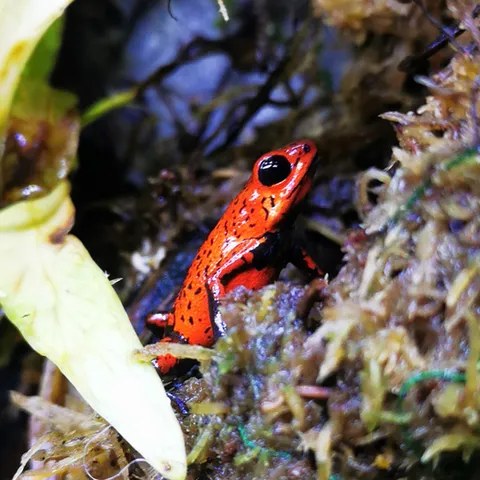
Oophaga pumilio, the strawberry poison dart frog, is a small, brightly colored frog from Central America, mainly Panama and Costa Rica. It is known for its huge range of color morphs, with dozens documented in the wild. As the name “Oophaga” (egg eater) suggests, the tadpoles feed only on unfertilized eggs. Wild frogs get their toxins from alkaloid-rich ants; in captivity their diet is different, and they lose them.
Adults usually reach 1.5–2.5 cm (0.6–1 inch), and with good care they live around 10 years in captivity. In the wild they live in the tropical forests of Panama and Costa Rica.
Care
Terrarium Size and Keeping
A pair needs at least 45x45x45 cm (18x18x18 inches). Males are very territorial, so never keep more than one male per tank. We have also seen aggression between females, though much less than between males. For breeding, and to keep stress low, pairs work best. A small group raised together (please don’t use siblings, to avoid inbreeding) does seem to get along better, even once grown. Our observations also show that the frogs are out in view most when they have lots of places to hide, so give them plenty of hides.
Temperature
During the day, 22–28°C (72–82°F) is ideal. At night it can drop to around 20–22°C (68–72°F). Sudden swings stress these frogs, so keep conditions stable. There are reports of temperatures over 32°C measured in their habitat with males still calling, but we strongly recommend a maximum of 28°C, because a terrarium can never match the real habitat exactly.
Humidity
This species needs high humidity, 70–100%. Mist regularly and make sure the substrate holds moisture. Good airflow is also important to prevent mold and keep the frogs healthy. If humidity drops below this range for a short time and the tank has plenty of very humid spots (like bromeliads), the frogs stay active and we haven’t seen any harm. That isn’t ideal, though: relying on those humid spots will harm the animals in the long run.
Lighting
Oophaga pumilio needs 12-14 hours of light a day, and we recommend UVB for a few hours a week. In our behavioral study of the ‘Bribri’ morph, activity showed no link to the lighting in the terrarium, so you can choose the light intensity based purely on what the plants need.
Breeding
Breeding Setup
Give them a quiet, safe tank with plenty of vertical surfaces to climb. Keep humidity high and feed well. They mostly lay their eggs in film canisters, so offer plenty of them. Bromeliads play a big part in their breeding cycle, but the frogs will also use other places to deposit tadpoles (water-filled film canisters, pipes and so on) if you offer them.
Mating Behavior
Males are territorial and compete with each other for females. When a female is ready to mate, she taps the male on the back. The male then leads her to a hidden spot to lay the eggs, often a film canister or something similar where the eggs are protected.
Egg Laying
The female lays several eggs at a time in a damp, sheltered spot; in captivity, mostly in film canisters. The male stays close and fertilizes the eggs, but there is no amplexus.
Tadpole Care
The most remarkable part of breeding Oophaga pumilio is how the tadpoles are fed. As the name suggests, they live on unfertilized eggs from the female. About once a week she visits each tadpole and lays several infertile eggs for it. The tadpoles eat the eggs along with some of the female’s dead skin, which seems to speed up their growth. We strongly recommend leaving the tadpoles in the parents’ tank, because the parents keep caring for them.
Raising tadpoles outside the parents’ tank is possible in theory but hard. Some keepers have managed with egg clutches from other females, but that isn’t ideal. Crushed chicken egg yolk has also been used, though it fouls the water quickly. Tadpoles are cannibalistic, so if they don’t stay with their parents, each one needs its own container. Usually, though, the parents look after them well.
Once the tadpoles have both front and back legs, we usually take them out of the parents’ tank and let them finish developing in a separate container. Catching the froglets in the parents’ tank later is almost impossible.
Seasonal Cycles
We recommend a dry season of 2-3 months over winter, so the females can recover from producing eggs non-stop the rest of the year. We have found that froglets born after the dry season tend to be noticeably larger than those from the end of the rainy season.
Unlike most other dart frogs, O. pumilio changes its behavior a lot during the dry season and becomes much harder to spot, so don’t worry if you don’t see them for a week or more. As long as humidity and temperature are right (about 70% RH and 20-22°C), keep adding dusted fruit flies a couple of times a week and they will be fine.
References
Animal Diversity Web - Oophaga pumilio. Available at: https://animaldiversity.org/accounts/Oophaga_pumilio/ (Accessed: 06.01.2025).
Dendrobase - Oophaga pumilio. Available at: https://www.dendrobase.de/html/D_oophaga_pumilio.html (Accessed: 06.01.2025).
iNaturalist - Oophaga pumilio. Available at: https://www.inaturalist.org/taxa/66278-Oophaga-pumilio (Accessed: 06.01.2025).
Photo gallery