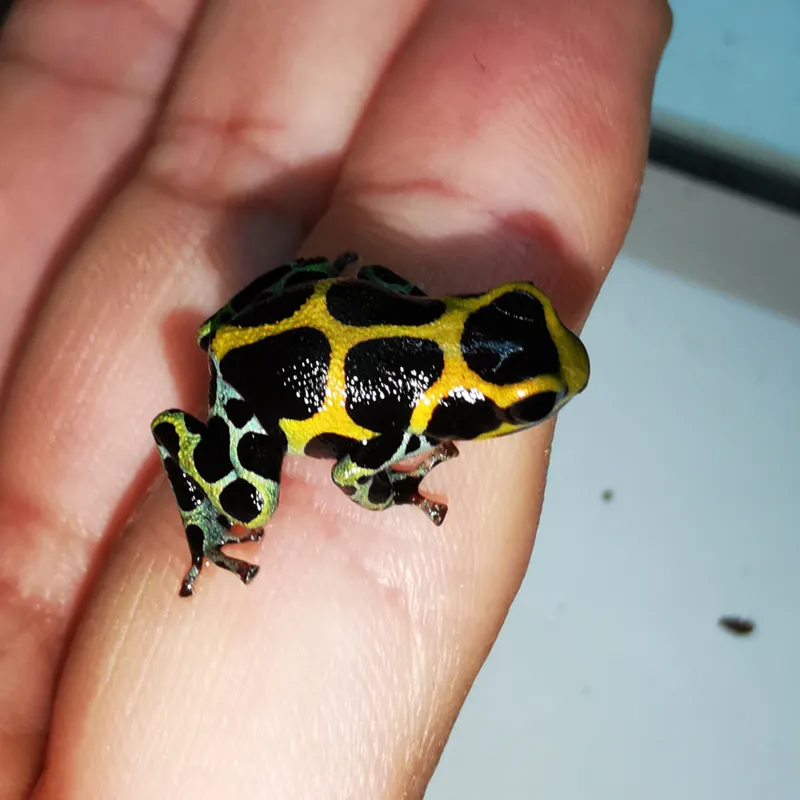
Ranitomeya imitator Care and Breeding
How to keep and breed Ranitomeya imitator: terrarium, lighting, diet, tadpoles, froglets and seasonal cycles.
Care
Terrarium Setup
Like other dart frogs, Ranitomeya imitator uses both the ground and the upper levels of the terrarium. For a small group, plan on at least 20 gallons (about 75 litres). Fill it with live plants, branches and other structure so it resembles a piece of rainforest. Keep humidity at 60-80% and the temperature at 22-26°C (72-78°F). Good ventilation keeps the air moving and stops mould.
Lighting
These frogs do best under moderate light, similar to the dappled light on a rainforest floor. Combine general lighting with a few brighter spots and run 12 hours of light and 12 hours of darkness. LEDs or fluorescent tubes at around 6,500K give a natural daylight look.
UVB isn’t strictly necessary, but it helps. A few hours of UVB a week supports bone development and general health. Avoid strong direct light, which heats the terrarium and dries it out, and leave some shaded spots where the frogs can get out of the light.
Diet
R. imitator eats small arthropods, mainly fruit flies and springtails. Vary the food, and dust it with Dendrocare, Repashy Calcium Plus or a similar supplement so the frogs get all the nutrients they need.
Handling and Health
These are delicate frogs, so handle them as little as possible. If you have to, make sure your hands are clean and free of any chemicals, since dart frogs react badly to contaminants. Watch their skin: it is often the first place stress or poor health shows.
Breeding
Breeding Setup
You can breed R. imitator in a separate tank or in a section of their main vivarium. Give them plenty of hiding spots, vertical surfaces and damp places to lay eggs. Unlike most other dart frogs, Ranitomeya species often lay their eggs in seemingly random places, such as in the leaf litter or in small cracks in the background. Film canisters are still worth adding, because they do use them.
Courtship and Egg Laying
Males call from exposed spots to attract females. A receptive female walks up to the male and taps him on the back. He then leads her to a laying site, usually a film canister or another sheltered spot, where she lays her eggs.
Tadpole Care
R. imitator tadpoles are oophagous: they can feed on unfertilised eggs the female lays for them. Unlike Oophaga tadpoles, though, they don’t depend on them and will eat other food as well. If the tadpoles stay in the parents’ tank, the parents look after them and regularly lay eggs for them to eat. Check on them now and then anyway to make sure they are being fed. If you raise them outside the tank, keep each tadpole in its own container, because they are cannibalistic. Feed them fish flakes, spirulina and other small foods.
Froglet Care
After metamorphosis the froglets can live together. We keep them in small containers (Tupperware with ventilation holes works well) with sphagnum moss and leaf litter. Feed springtails until they can manage small fruit flies (D. melanogaster). At that point they can also move into a grow-out tank.
Seasonal Cycles
R. imitator doesn’t need a strict seasonal cycle in captivity, but small shifts in temperature and humidity can help trigger breeding. In the wild, changes in temperature and rainfall drive breeding, and you can copy that by adjusting conditions gradually over the year. We recommend a dry season of two to three months a year. It gives the females a break from constantly producing eggs, which means less stress and healthier offspring.
References
AmphibiaWeb - Ranitomeya imitator. Available at: https://amphibiaweb.org/species/1634 (Accessed: 08.01.2025).
DendroBase - Ranitomeya imitator. Available at: https://dendrobase.de/html/D_ranitomeya_imitator.html (Accessed: 08.01.2025).
iNaturalist - Ranitomeya imitator. Available at: https://www.inaturalist.org/taxa/134968-Ranitomeya-imitator (Accessed: 08.01.2025).
Photo gallery