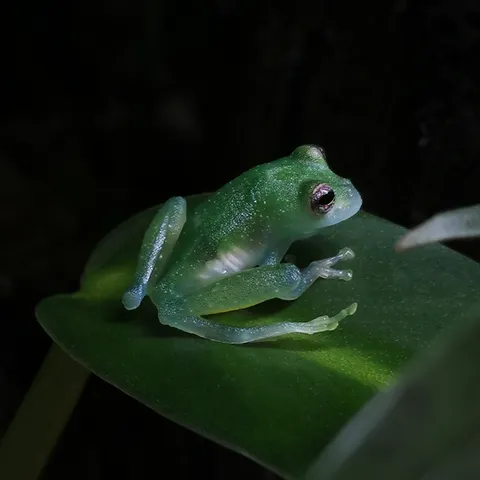
Teratohyla pulverata Care and Breeding
How to keep and breed the Powdered Glass Frog, Teratohyla pulverata: terrarium, climate, feeding, breeding setup and the rain season that triggers it.
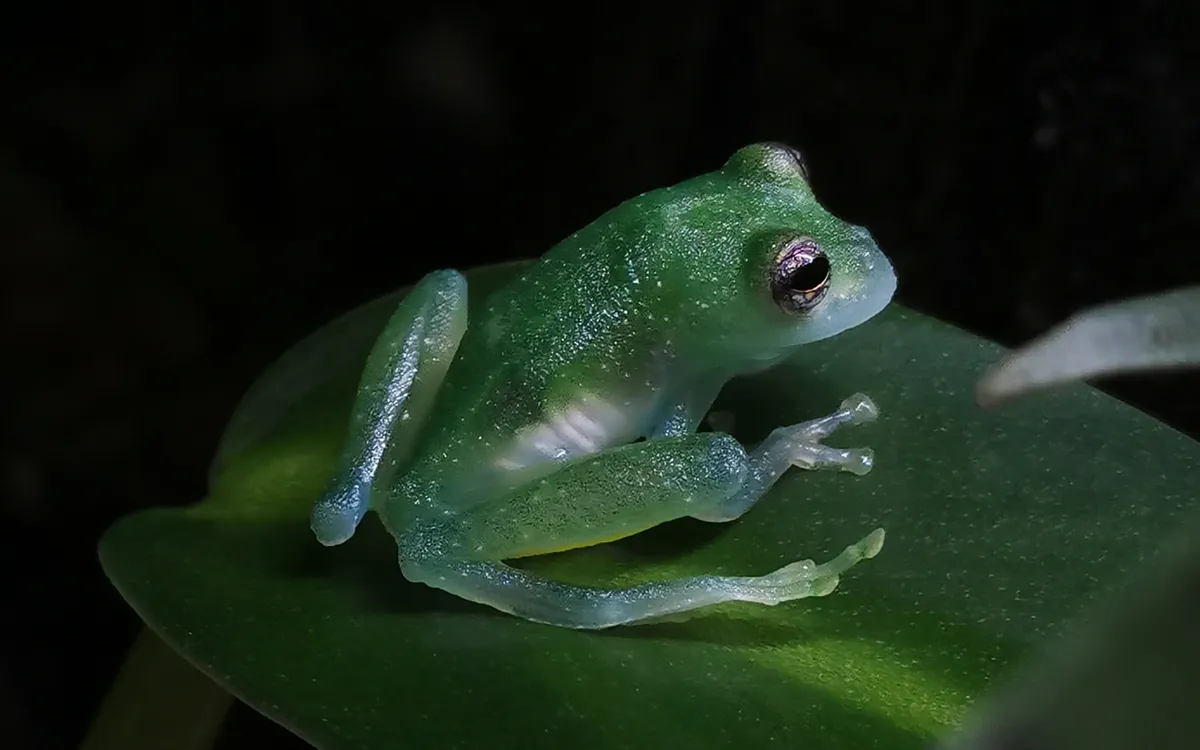
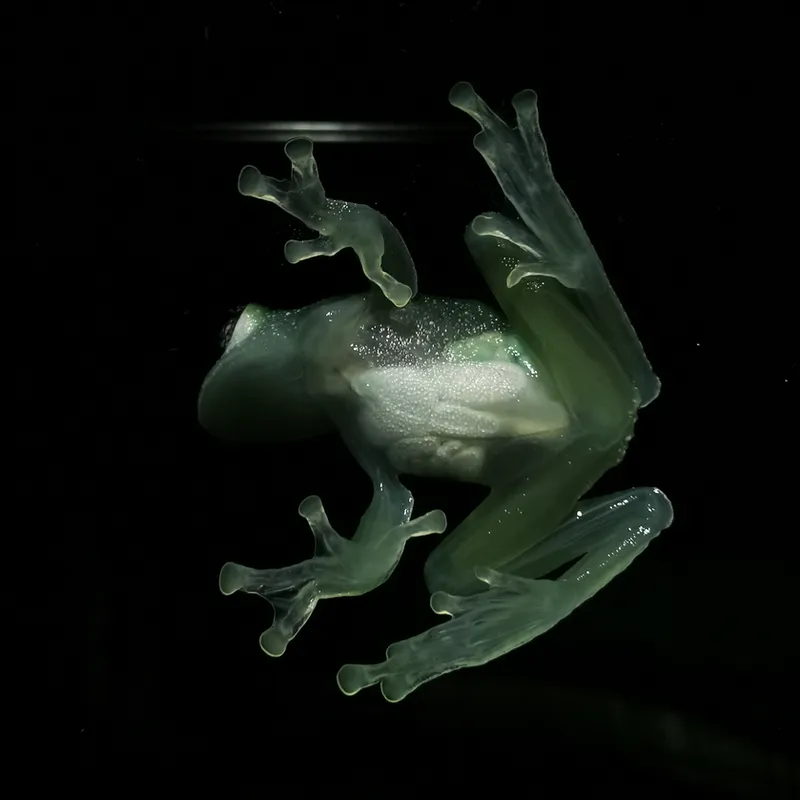
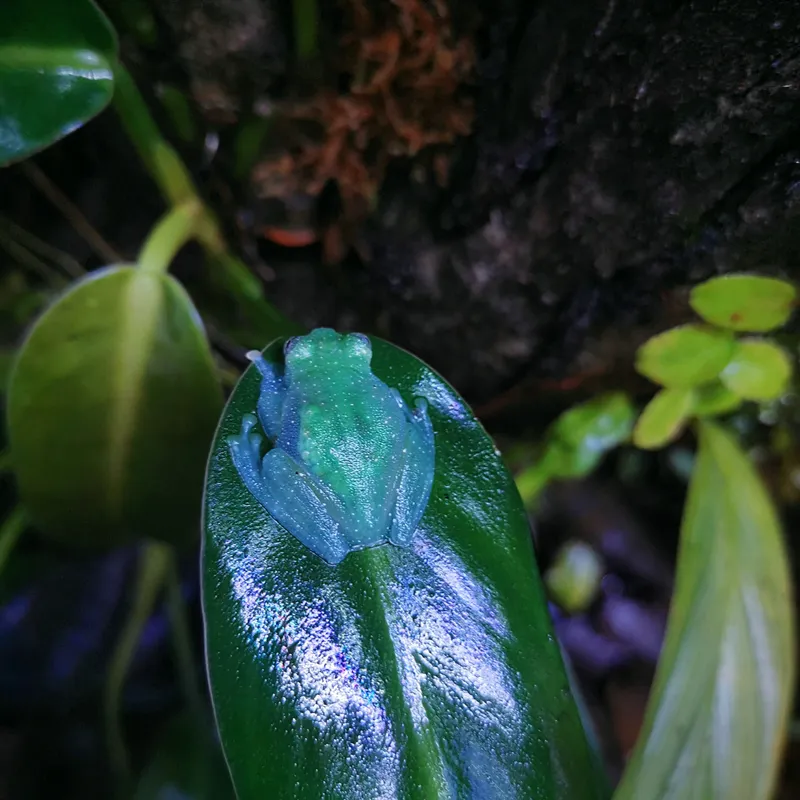
Teratohyla pulverata, the Powdered Glass Frog, is a small glass frog from Central America. Like other glass frogs it has a see-through belly, which sets it apart from most other amphibians. It lives in humid tropical forests near streams, where it spends its life in the vegetation. The frogs are nocturnal and usually sit on leaves during the day.
Care
Terrarium Size
A pair needs a terrarium of at least 45x45x60cm. Height matters more than floor space, because they live almost entirely in the plants. At 60 cm they can move comfortably along plants and branches. They will use a much taller terrarium too, so if you have the room, go for it.
Temperature
Keep T. pulverata at 22-26°C (71-79°F) during the day and slightly cooler at night, 18-22°C (64-72°F). Keep the temperature steady and avoid big swings.
Humidity
Aim for high humidity, ideally 70-90%. Regular misting, a humidity tray or a water feature such as a small pond or stream all help to keep it there. Don’t soak the substrate, or mould will follow.
Lighting
T. pulverata prefers subdued light. A 12-hour day and 12-hour night works well. UVB is not needed for this nocturnal species, and we have never seen ours use a UVB basking spot. What we do recommend is a gradual day/night transition with dimmable LEDs. That way you can watch them become active in the evening without shining a torch at them in the dark.
Feeding
They eat small invertebrates, including fruit flies, small crickets and pinhead roaches. Gut-load the insects so the frogs get enough nutrients, and dust them with calcium and vitamins at every feeding to support healthy bone development.
Breeding
Breeding Setup
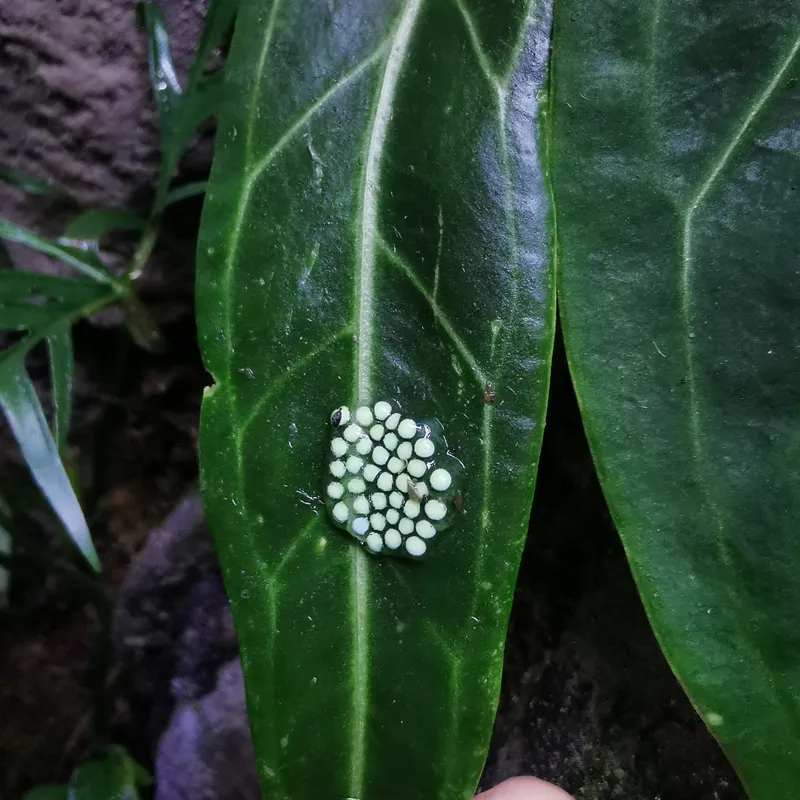
For breeding, use a larger, more natural setup. The bottom of the terrarium has to be flooded, because the frogs lay their eggs on leaves that hang over the water. We have seen them use leaves from 2-8 cm wide, so many plants will do. Give them more than one option to choose from.
You will also need a rain chamber or a terrarium with a rain system that can run for several hours. During the breeding season we switch the rain on about an hour before the lights go off and leave it running overnight. Females lay around 30-45 eggs every 2-3 weeks.
Breeding Behavior
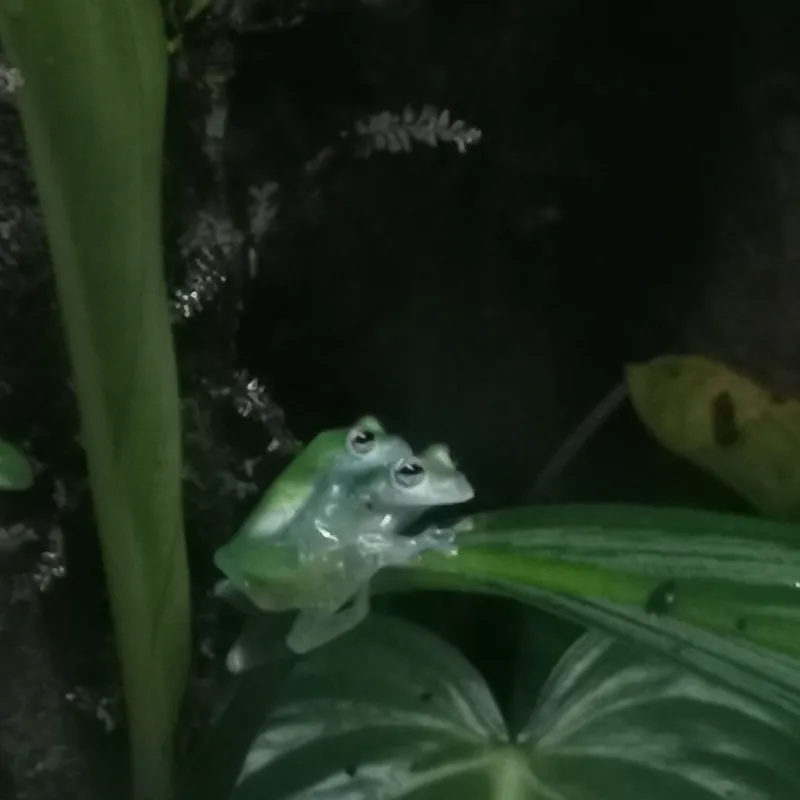
Males usually call from an exposed spot in the terrarium. When a female comes close, the male climbs on for amplexus and the female carries him to a laying site. Apart from the first 1-2 hours after laying, this species shows no parental care.
Tadpole Care
When the eggs hatch, the tadpoles wriggle until they drop off the leaf into the water below. From there they can be raised together and fed fish flakes. We keep the water at the same temperature as the parents’ tank.
Seasonal Cycles
Seasons are very important for breeding T. pulverata. They only start breeding with the rain season; raising the humidity alone won’t do it. We lower the humidity to 60-70% RH for two to three months, then raise it gradually over one week. After that we start running the rain overnight.
References
AmphibiaWeb (2025) - Teratohyla pulverata. Available at: https://amphibiaweb.org/cgi/amphib_query?where-genus=Teratohyla&where-species=pulverata (Accessed: 08.01.2025).
iNaturalist (2025) - Teratohyla pulverata. Available at: https://www.inaturalist.org/taxa/65192-Teratohyla-pulverata (Accessed: 08.01.2025).
IUCN Red List of Threatened Species (2025) - Teratohyla pulverata. Available at: https://www.iucnredlist.org (Accessed: 08.01.2025).
Photo gallery