Theloderma corticale Care and Breeding
How to keep and breed the Vietnamese Mossy Frog, Theloderma corticale, including how the water temperature of the tadpoles decides the sex ratio.
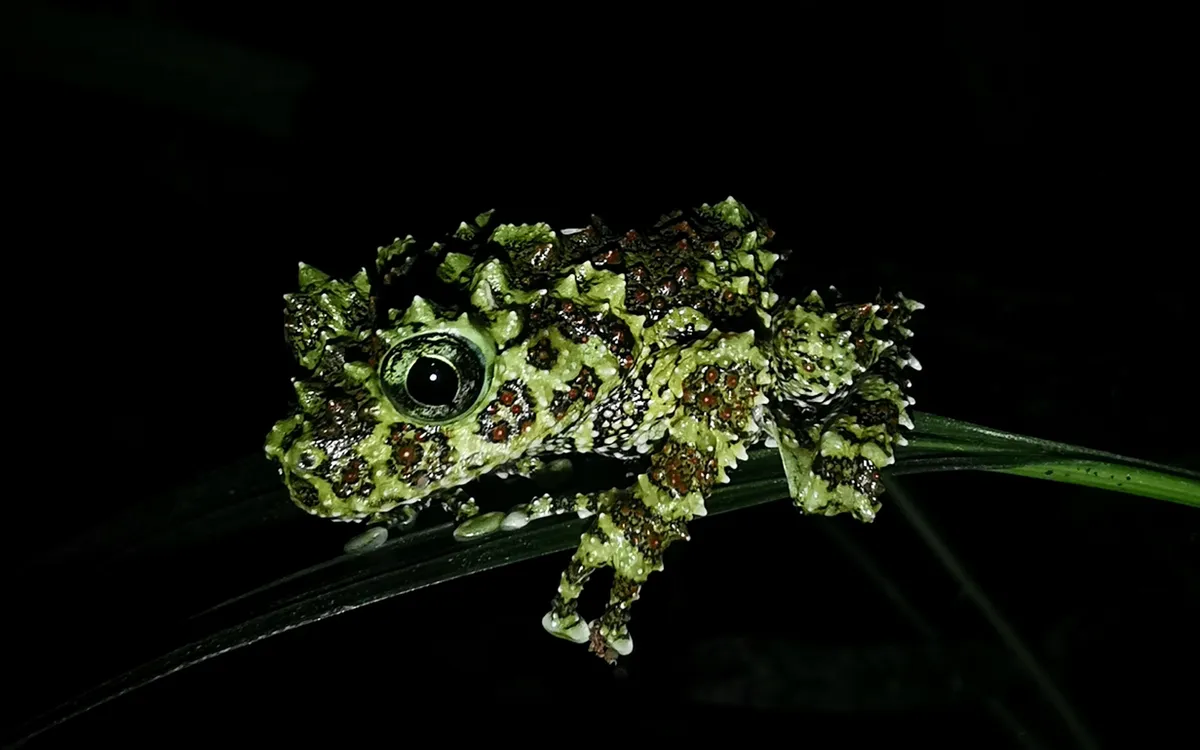
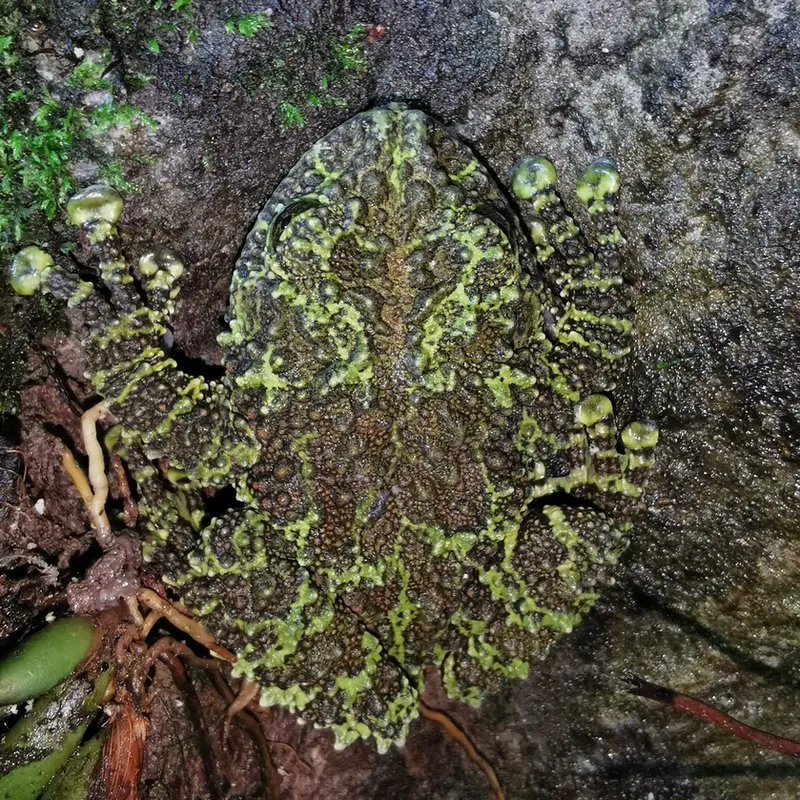
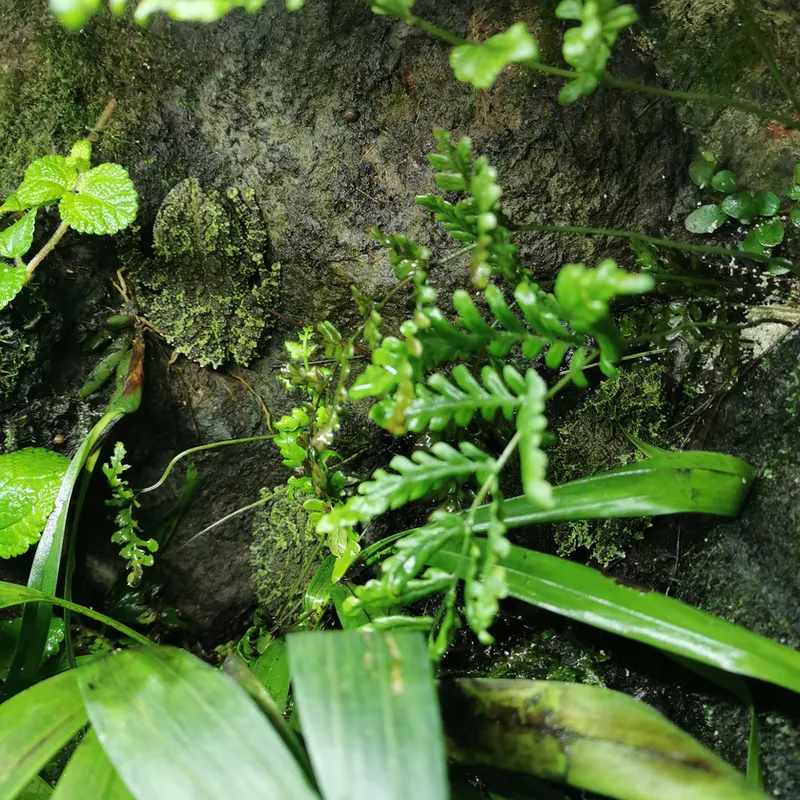
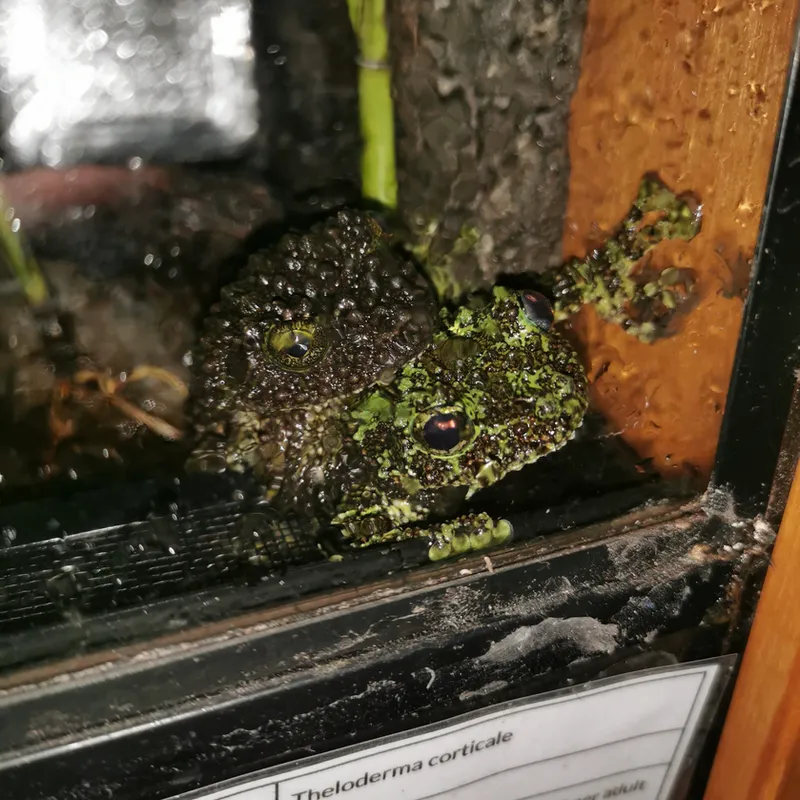
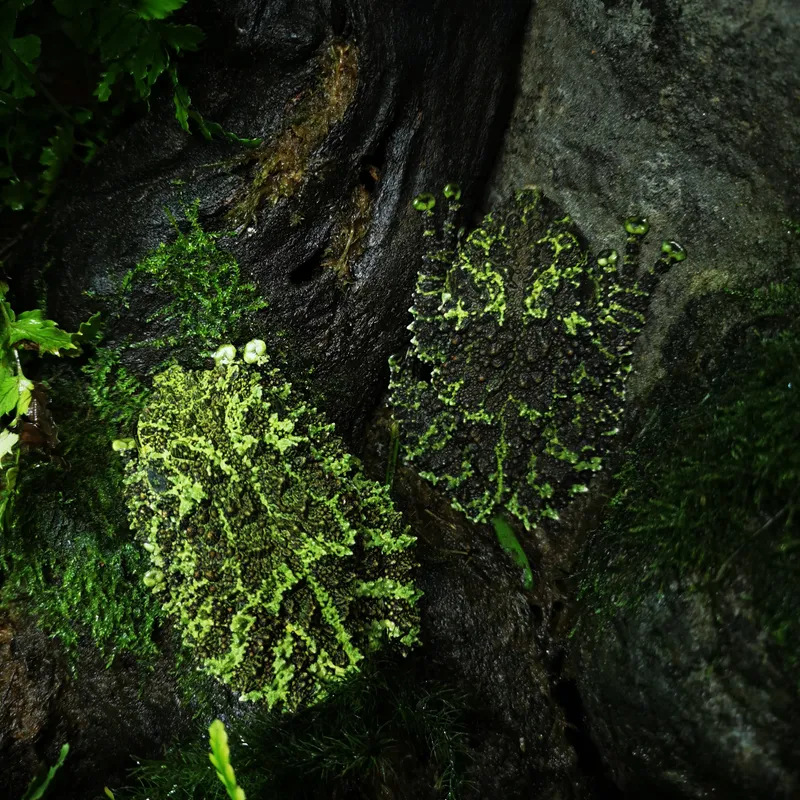
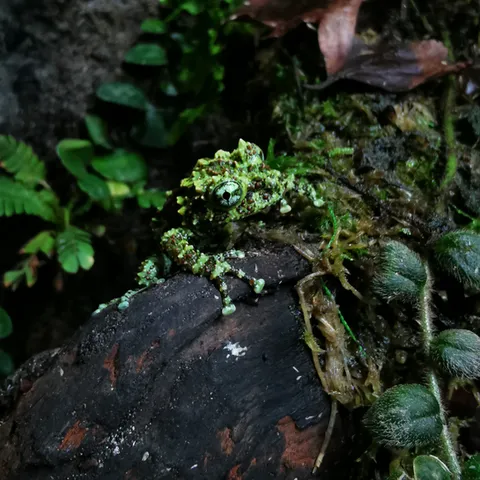
Theloderma corticale, the Vietnamese Mossy Frog, is a nocturnal frog from the rainforests of Southeast Asia, mainly northern Vietnam and southern China. Its skin looks like moss, which makes it almost impossible to spot against a mossy background. Its looks and fairly simple care have made it more and more popular in the hobby.
Care
Terrarium Size
For one or two frogs, use a terrarium of at least 60 x 45 x 45 cm (24 x 18 x 18 inches). For a group, or for a more elaborate setup with plants, branches and hiding places, around 75 x 45 x 60 cm (30 x 18 x 24 inches) is ideal. They do best in tall enclosures with plenty of room to climb.
Temperature
During the day, keep them at 18-28°C (64-82°F), dropping slightly to 18-22°C (64-72°F) at night.
Humidity
They come from humid tropical forests and need high humidity, 70-90%. Mist regularly and put a drainage layer at the bottom of the terrarium so the land areas don’t get waterlogged.
Lighting
Moderate light is enough. They don’t need UVB, but they do need a natural day-night cycle. A 12-hour day with low-wattage bulbs or LEDs works well. We recommend dimmable LEDs for a gradual transition between day and night. The frogs behave more naturally, and you get to see them active before the lights go off.
Substrate
We use filter foam topped with sphagnum moss and leaf litter. It runs smoothly into the water area and keeps the ground well aerated.
Water
These frogs spend long periods in the water, so a water area is a must. They like water rich in tannins, but they produce a lot of waste, so filter the water constantly and change 25-50% of it every one to two weeks. The water area should cover at least 60% of the floor and be about 8 cm deep.
Feeding
T. corticale eats small invertebrates such as crickets, mealworms and small moths. Vary the food and gut-load the insects. Feed 1-2 times a week, depending on the frog’s age and size, and dust the insects with calcium and multivitamin powder every time.
Breeding
Sexing
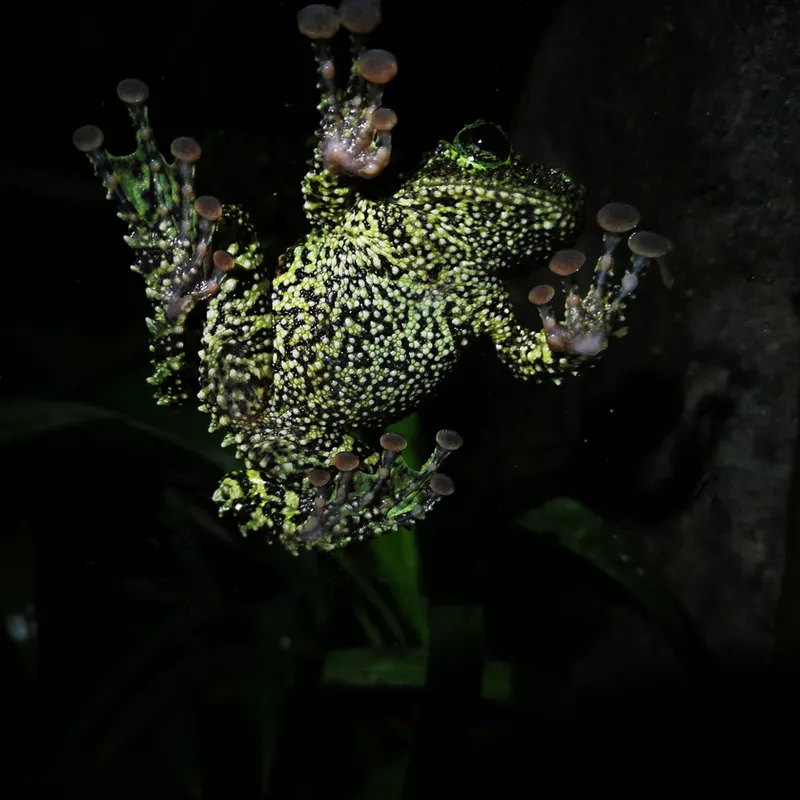
Males can usually be recognised by the slightly pink underside of their toe pads (see the gallery for a photo). The only sure way to sex them, though, is to hear a male call or see a female lay eggs.
Breeding Setup
For breeding, copy their natural habitat as closely as you can. Keep the breeding tank slightly warmer and more humid. Leaf litter, moss and small branches or logs encourage natural behaviour. We have also noticed that flowing water tends to trigger breeding.
Our T. corticale terrarium has a rain system that can run for several hours, but that doesn’t seem to be common practice.
Egg Deposition and Tadpole Care
Females lay their eggs on the undersides of leaves or logs. When the tadpoles hatch, they drop into the water. We recommend leaving them in the parents’ tank, because they like to eat the insect remains left by the adults. Raising them separately also works. The tadpoles turn into froglets after about 3-6 months.
Water temperature during the tadpole stage decides the sex. Above 22°C you get almost no females. Even at 15-17°C, the lowest we recommend, the ratio is usually one female to three males. So keep tadpoles below 20°C at all times, even though they develop a little more slowly.
Seasonal Cycles
T. corticale has no fixed breeding season in captivity, but they are more likely to breed in the wet season, when humidity and temperatures are higher. You can copy this by raising the humidity and misting more often. A 12-hour light cycle with slightly higher temperatures can also help.
References
AmphibiaWeb - Theloderma corticale. Available at: https://amphibiaweb.org/species/4549 (Accessed: 07.01.2025).
Animal Diversity Web - Theloderma. Available at: https://animaldiversity.org/accounts/Theloderma/ (Accessed: 07.01.2025).
iNaturalist - Theloderma corticale. Available at: https://www.inaturalist.org/taxa/26641-Theloderma-corticale (Accessed: 07.01.2025).
Photo gallery