Dendrobates tinctorius Care and Breeding
How to keep and breed Dendrobates tinctorius: terrarium, climate, feeding, eggs, tadpoles, froglets and seasons.
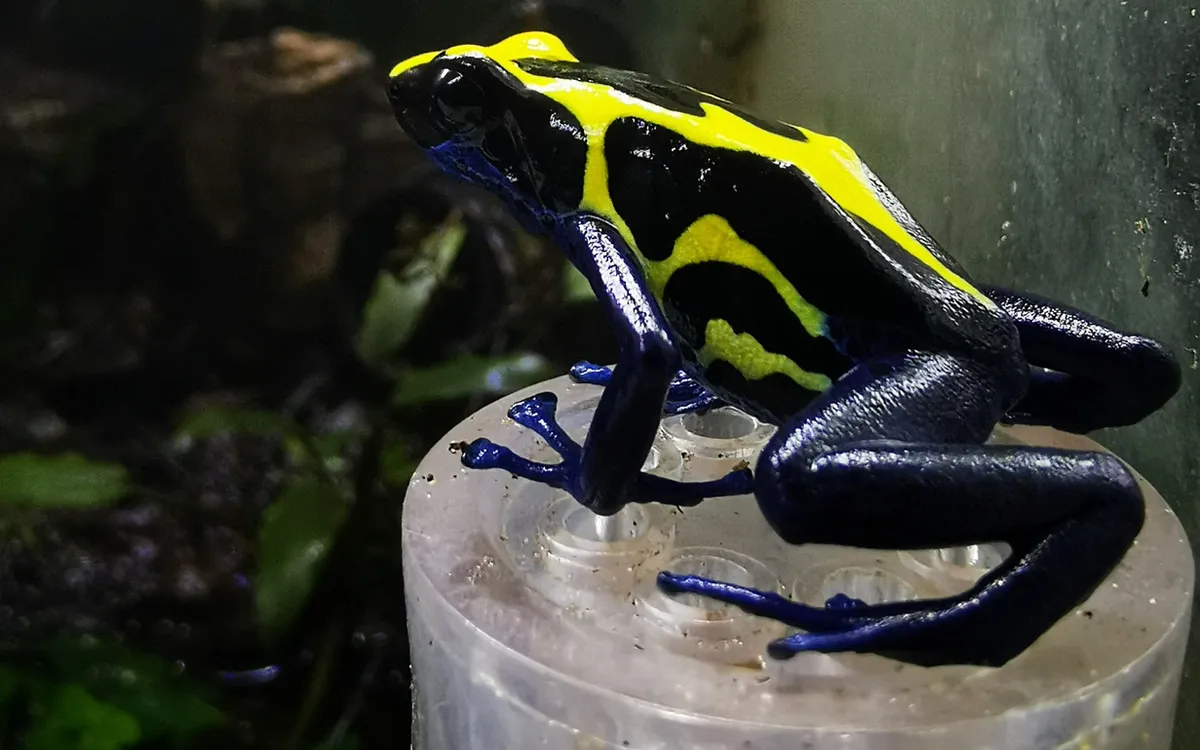
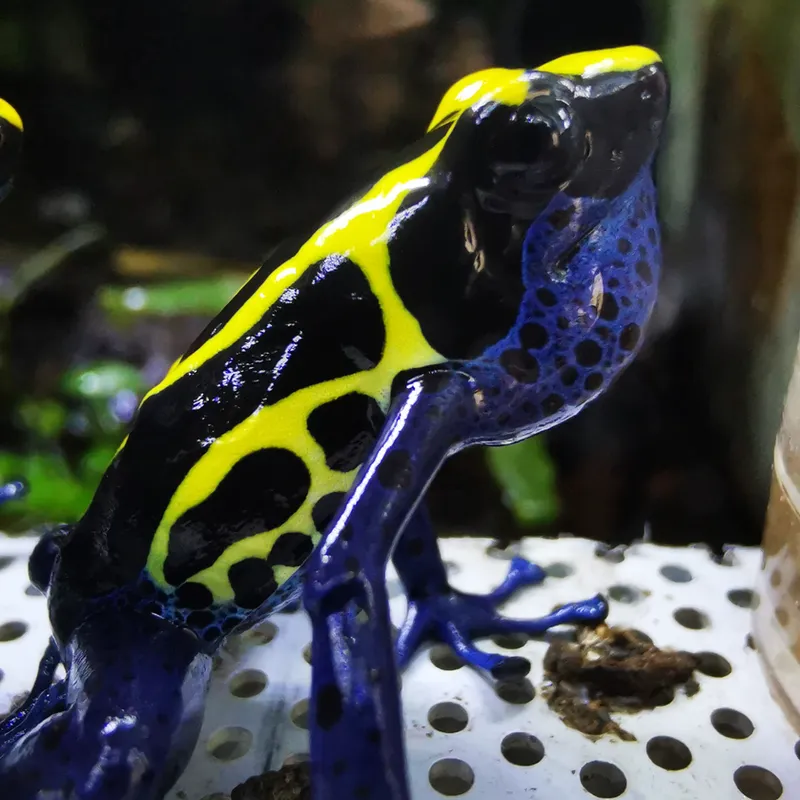
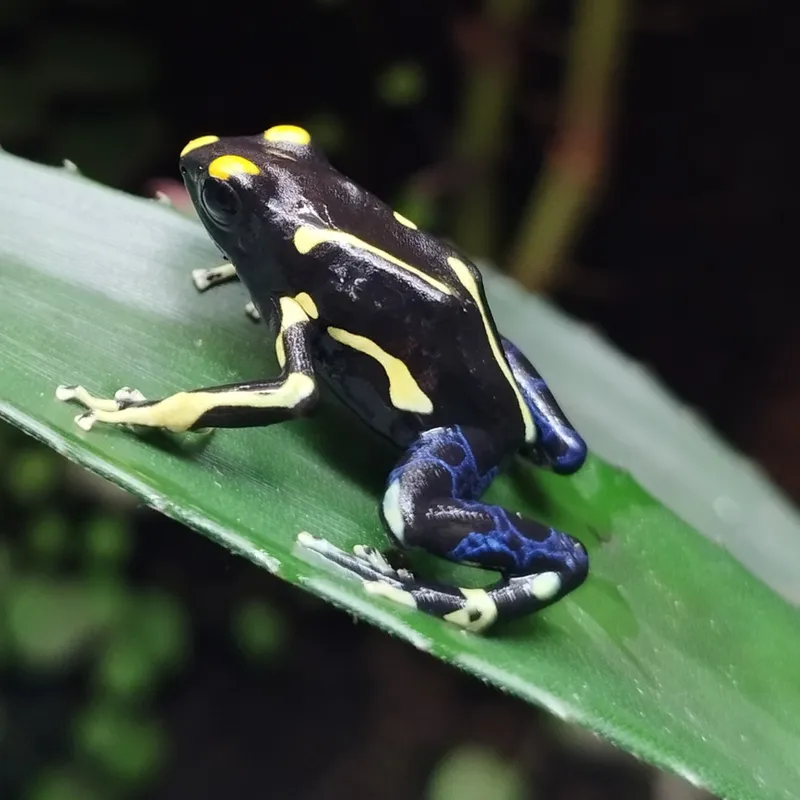
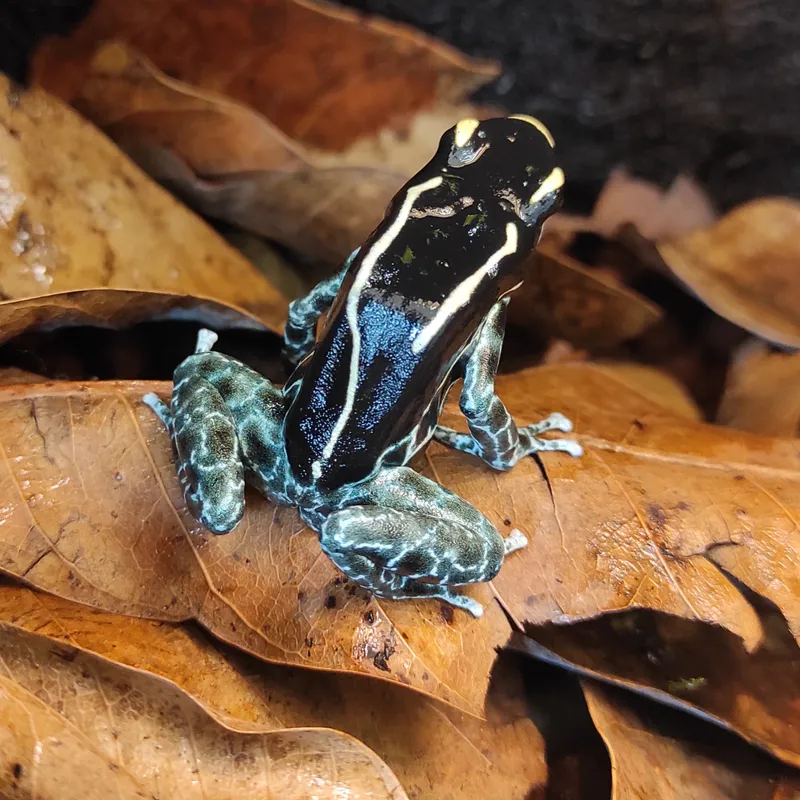
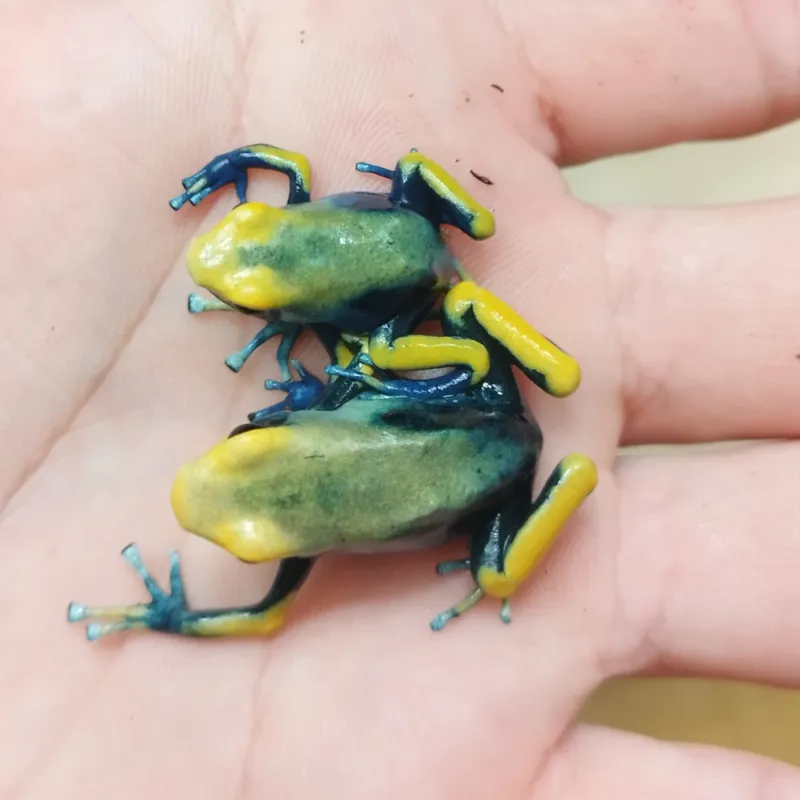
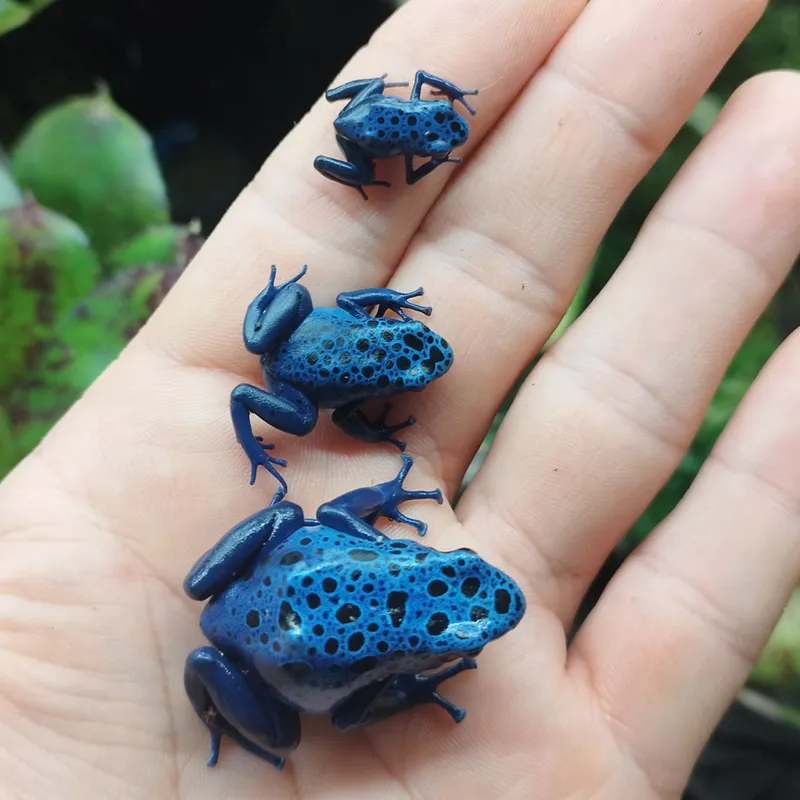
Dendrobates tinctorius, the dyeing poison dart frog, comes from the tropical rainforests of South America. Its bright colours warn predators that it is toxic. Captive-bred frogs are not toxic, because their diet doesn’t contain what they need to build up the toxins. They are active, bold frogs that can live up to 15 years in captivity and grow to 3.5-6 cm (1.4-2 inches). In this species the females tend to be more aggressive than the males, so always keep more males than females together. For breeding, we recommend keeping a pair, not a group.
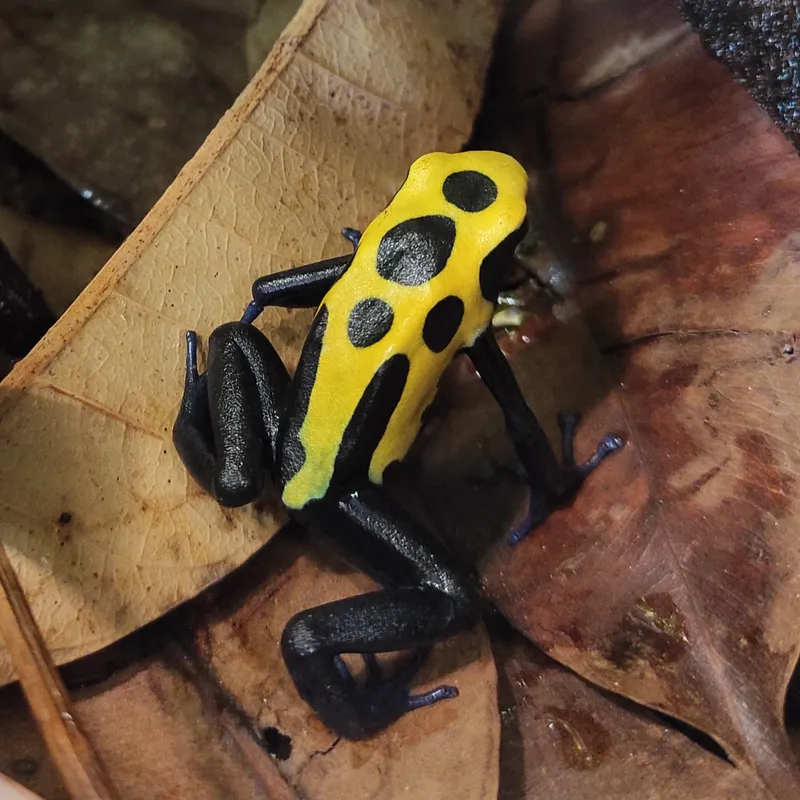
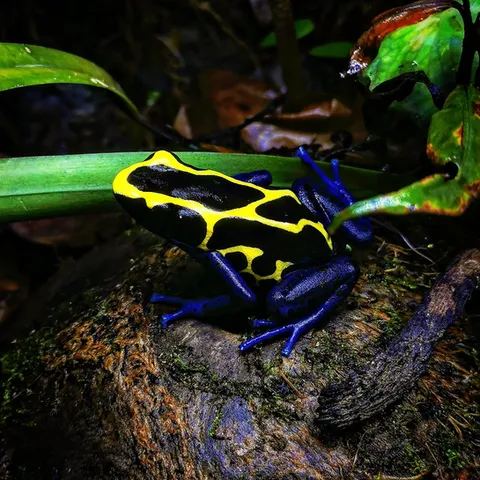
D. tinctorius comes in many colour morphs that differ in pattern and intensity. They are usually named after the region they come from or after their colouring.
Care
Terrarium Size and Keeping
A single frog or a pair needs a terrarium of at least 45x45x45 cm (18x18x18 inches). For groups, go bigger, so they have room to explore and less reason to fight over territory. Give them climbing surfaces at different heights and plenty of hiding spots. Avoid substrates that get soggy in high humidity (we like aquarium filter foam), and always cover the ground with leaf litter.
Temperature
Keep the terrarium at 22-27°C (72-80°F) during the day and let it drop slightly to 20-22°C (68-72°F) at night. Temperatures above 30°C (86°F) can be fatal. Cooler temperatures are less dangerous, but avoid them for long periods.
Humidity
Keep humidity high, at 80-100%. Mist regularly and add a drainage layer so the substrate doesn’t get waterlogged (not needed with filter foam). In a well-ventilated terrarium you can mist up to four or five times a day during the rain season; in a standard terrarium, three times a day is usually enough. In the dry season (more on that under Breeding), once a day or even every other day is usually enough. A hygrometer helps you keep an eye on it.
Lighting
Run full-spectrum lighting for 12 hours a day. D. tinctorius doesn’t need UVB to survive, but a little UVB improves health and activity (we switch it on for a few hours a week). Strong light also makes the plants grow, which gives the frogs cover and raises the humidity.
Feeding
In the wild these frogs eat small invertebrates. In captivity, flightless fruit flies (Drosophila sp.) are the staple, with springtails, isopods and pinhead crickets now and then for variety. Always dust the insects with a supplement such as Repashy Calcium Plus or Dendrocare at every feeding.
Breeding
With the right setup and some attention to detail, D. tinctorius breeds well in captivity.
Sexing and Pairing
Males and females look alike. Males usually have larger toe pads and call; females are a little bigger and rounder. The only way to be sure, though, is to hear a male call or see a female lay eggs.
Breeding Setup
Give them sheltered places to lay eggs, such as petri dishes under coconut huts, or film canisters. The male calls to attract a female. When she is ready, she walks up to him and taps him on the back, and he leads her to a laying site. The eggs need a humid environment and a stable temperature to develop. We take the eggs out of the terrarium once they are laid. If they are on a petri dish, rinse them with dechlorinated water and put a lid on. If they are somewhere else, flush them into a petri dish with a pipette.
Tadpole Care
Keep the eggs moist and the humidity constant. Once they hatch, move the tadpoles to a separate container or water area with dechlorinated water and feed them good-quality fish flakes or tadpole food. They stay in the water for several weeks until they metamorphose into small frogs. The colder they are kept, the slower they develop; we keep tadpoles at around 22-27°C (72-80°F).
Froglet Care
Froglets need slightly different care from adults. They are still small and vulnerable, so keep their conditions under close control.
House them in a separate, smaller enclosure so larger frogs can’t bully them, with plenty of hiding spots. The substrate should be soft and moist but not wet, so they can move around easily and stay hydrated. We use small containers (such as Tupperware with small holes) with sphagnum moss and leaf litter.
Feed them small prey such as springtails. Depending on the springtail species, you may not be able to dust them with supplements. As soon as the froglets can eat Drosophila melanogaster, switch to those and dust them.
Seasonal Cycles
Seasons are a strong breeding trigger. More misting, higher humidity and longer days imitate the rain season and get the frogs into breeding mode. For the dry season, cut back on misting and light, as happens in the wild. A dry season isn’t strictly needed, but we highly recommend it: it gives the female two or three months of rest before she starts producing eggs again, and it improves the yield of the eggs.
References
Animal Diversity Web - Dendrobates tinctorius. Available at: https://animaldiversity.org/accounts/Dendrobates_tinctorius/ (Accessed: 07.01.2025).
Dendrobase - Dendrobates tinctorius. Available at: https://www.dendrobase.de/html/D_dendrobates_tinctorius.html (Accessed: 07.01.2025).
Photo gallery