
Simulating Seasons in a Tropical Terrarium
How to recreate the seasons of the tropics in a terrarium with temperature, humidity, rain systems and adjustable water levels.
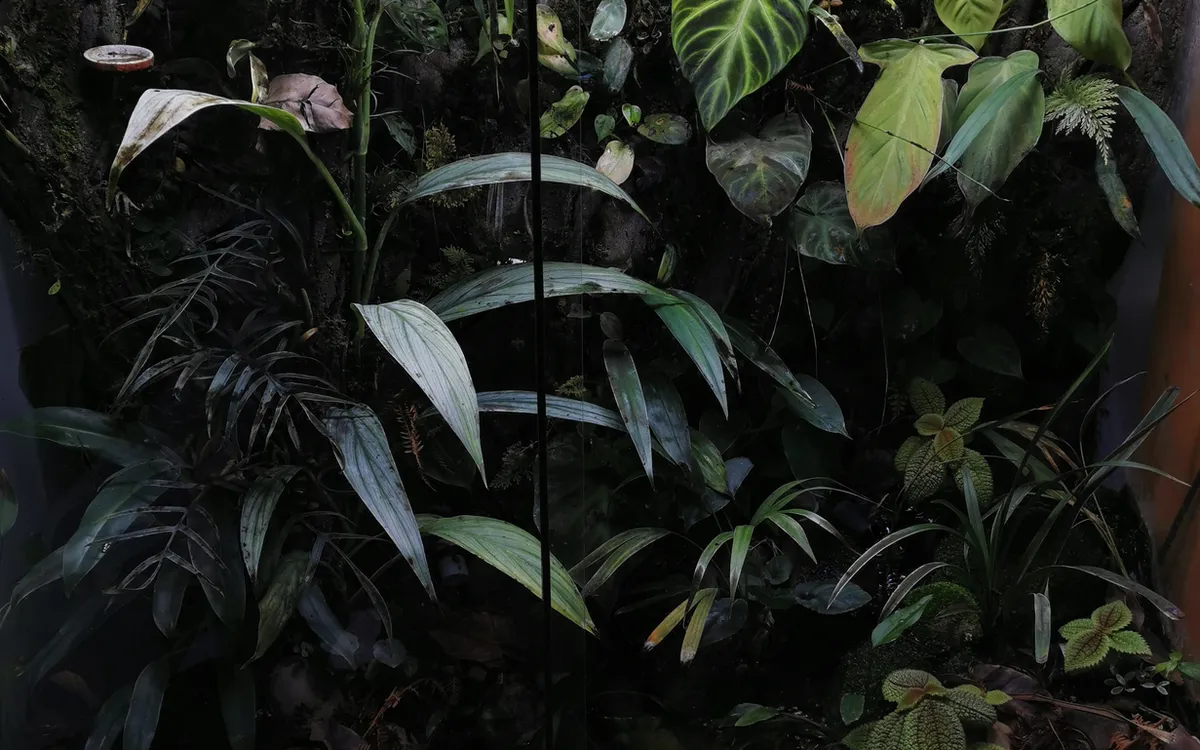
Keeping temperature and humidity constant all year is not enough for many tropical species. Animals and plants from rainforest regions are used to seasons, and recreating them improves the health of the whole terrarium, helps plants grow and gets some animals to breed. This article covers temperature and humidity first, then how to simulate a rain season and a flood season.
Managing Temperature and Humidity
Temperature and humidity are the basis of every tropical terrarium. Heating is covered in our article How to Heat Your Tropical Terrarium, which goes through heat mats, ceramic heat emitters and radiant heat panels. Which one fits depends on the size and layout of your terrarium and on what your plants and animals need.
For humidity there are two main options:
Manual Misting
- Pros: cheap and easy; you decide exactly where the water goes and how much; fine for small terrariums or if you only have a few.
- Cons: takes a lot of time with large or many terrariums; results vary if you don’t mist regularly; hard to recreate seasonal patterns.
Automatic Misting Systems
- Pros: consistent, precise humidity; can be programmed for seasonal changes such as daily rain cycles; saves time, especially with large setups or several terrariums.
- Cons: more expensive and more work to install; needs maintenance so nozzles don’t clog or leak; less control over individual areas unless the nozzles are placed carefully.
Which one suits you depends on the size of your terrarium, the species you keep and how much time you have. If you want to simulate seasons, an automatic system is the way to go. Seasons mean changing misting, lighting and heating over weeks and months, and that is much easier with a controller. Our own controller, JungleSIM, switches up to 8 Shelly smart plugs per terrarium and has seasons built in.
Misting covers daily humidity. To recreate the rain and flood cycles of the tropics you need more.
Simulating the Rain Season
The rain season is an important time in many tropical habitats, and some species only breed after long periods of rain.
Rain System Setup
To build a rain system yourself, you need:
- Pump: a strong pump that can run for several hours without overheating, sized to your terrarium.
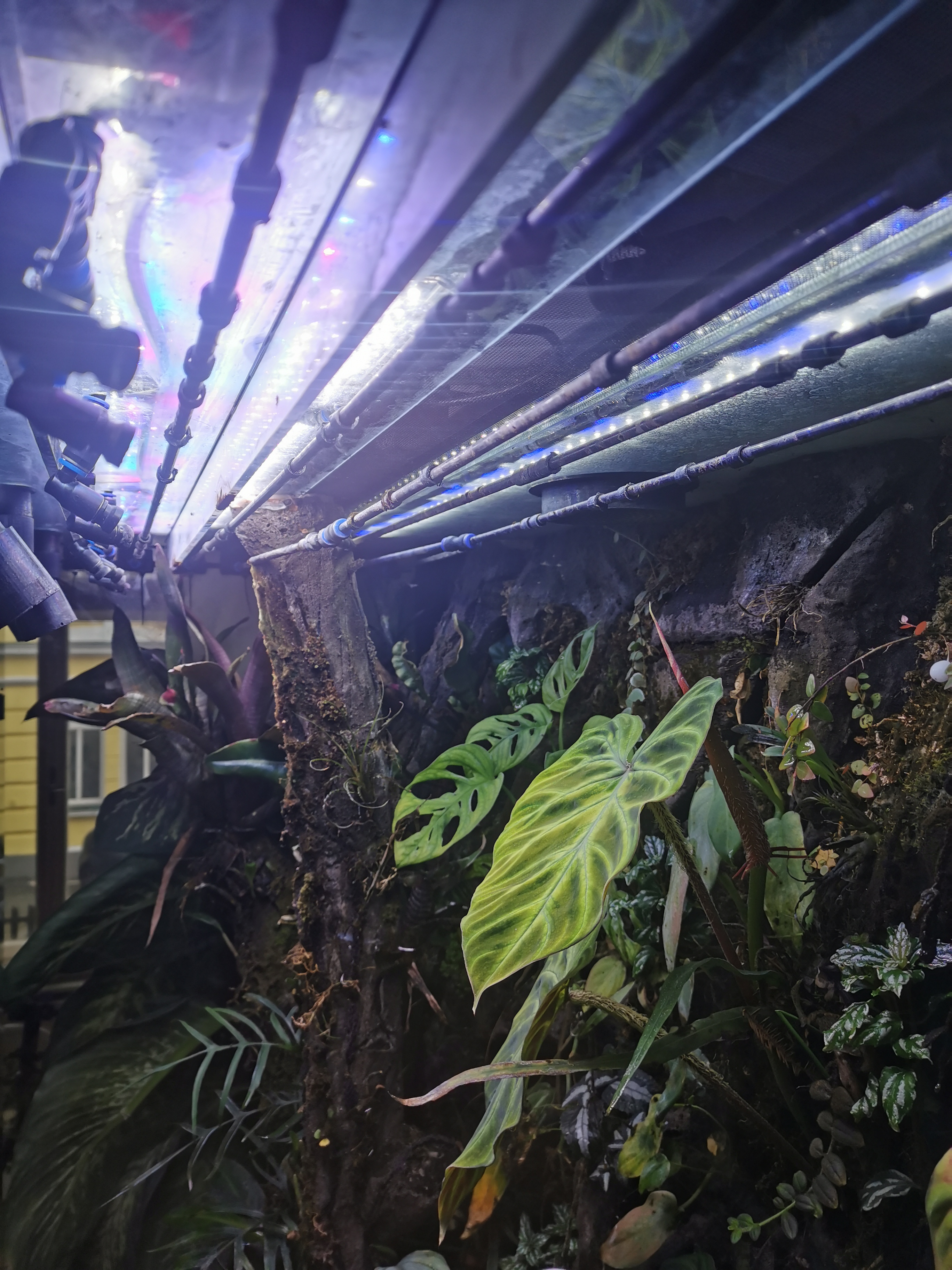
- Hoses and nozzles: run the hoses about 8–10 cm apart and make small holes in them so the water falls as drops, not as a stream. The hole size matters: if the holes are too big, the water sprays out in all directions and can end up outside the tank.
- Mounting: fix the hoses firmly so they don’t move while the system runs. Badly placed hoses give uneven rain or leave wet spots where you don’t want them.
The usual problem with DIY systems is that some holes start spraying instead of dripping, at random. That looks bad and can push water out of the terrarium. Fixing it usually means a lot of adjusting and regular maintenance.
That is why we developed the Rain System Kit. It includes:
- A pump built for continuous operation.
- Pre-calibrated hoses with hole sizes that reliably form drops.
- Mounting parts to hold the hoses exactly where you want them.
- Measures against spraying, so the rain stays controlled and looks natural.
With the kit you can run long rain periods without damaging your terrarium setup.
Choosing the Right Materials
A rain system puts a lot of water into the terrarium, so choose the materials with that in mind:
- Terrarium construction: some materials, such as untreated wood, rot when they stay wet for long. Use water-resistant or treated materials such as acrylic or sealed glass.
- Substrate: the wrong substrate becomes waterlogged, which suffocates roots and kills most plants. A free-draining substrate on top of a false bottom or drainage layer prevents this. Alternatively, with strong water circulation and well-managed nutrients, many plants grow fine with their roots under water, the same principle as hydroponics.
Optimizing Air Circulation
The rain season raises humidity, which can lead to fungus and mould on the leaves. Keep the air moving with fans or well-placed vents. More on this in our article Improving Airflow and Ventilation in Terrariums.
Placement of Rain Hoses
Where the hoses sit decides where it rains. Place them so the water only falls on certain areas, such as a pond section or a particular planted zone, and the rest of the terrarium stays dry. This gives you different microhabitats in one enclosure and keeps other areas from getting too wet.
Prolonged Rain Periods
Some species, such as certain amphibians or tropical fish, only breed after long periods of rain. A rain system that runs for several hours at a time recreates this. Long rain also raises the water level and floods low-lying areas, so the terrarium has to be designed for it.
Simulating the Flood Season
Many tropical regions also flood regularly. You can simply raise the water level, but there are better ways:
Dual Overflow System
- Install two overflows: one at the rain season water level and one at the dry season level.
- During the flood season, close the dry season overflow so the water stays at the higher level. Switching between seasons then needs no manual draining.
Adjustable Overflow System
An adjustable overflow lets you change the water level without changing anything else in the terrarium. It is the most flexible option if you want the water level to rise and fall over the year.
Flooded Substrate Zones
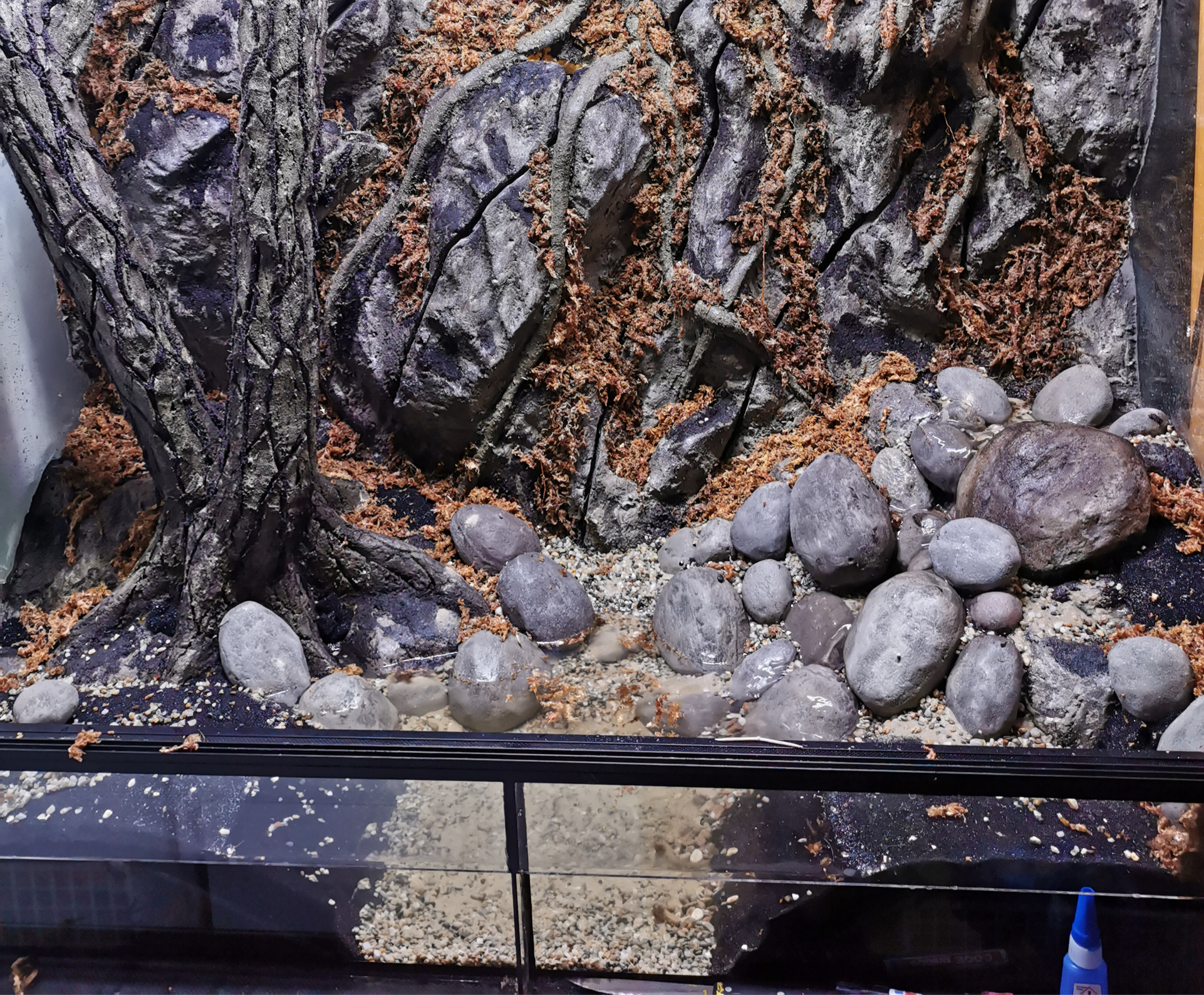
You can also build a zone that floods. A raised land area stays above water while the lower parts go under, which gives you several habitats in one enclosure.
Maintaining Water Quality
Flooding makes it harder to keep the water clean. Keep the circulation high so the water doesn’t stagnate and stays oxygenated. A canister or sponge filter keeps it clear. Watch the nutrient levels too: submerged plants need them, but too much feeds algae.
Rain systems and overflows are available in our shop, and our other articles cover more on terrarium care and automation.